
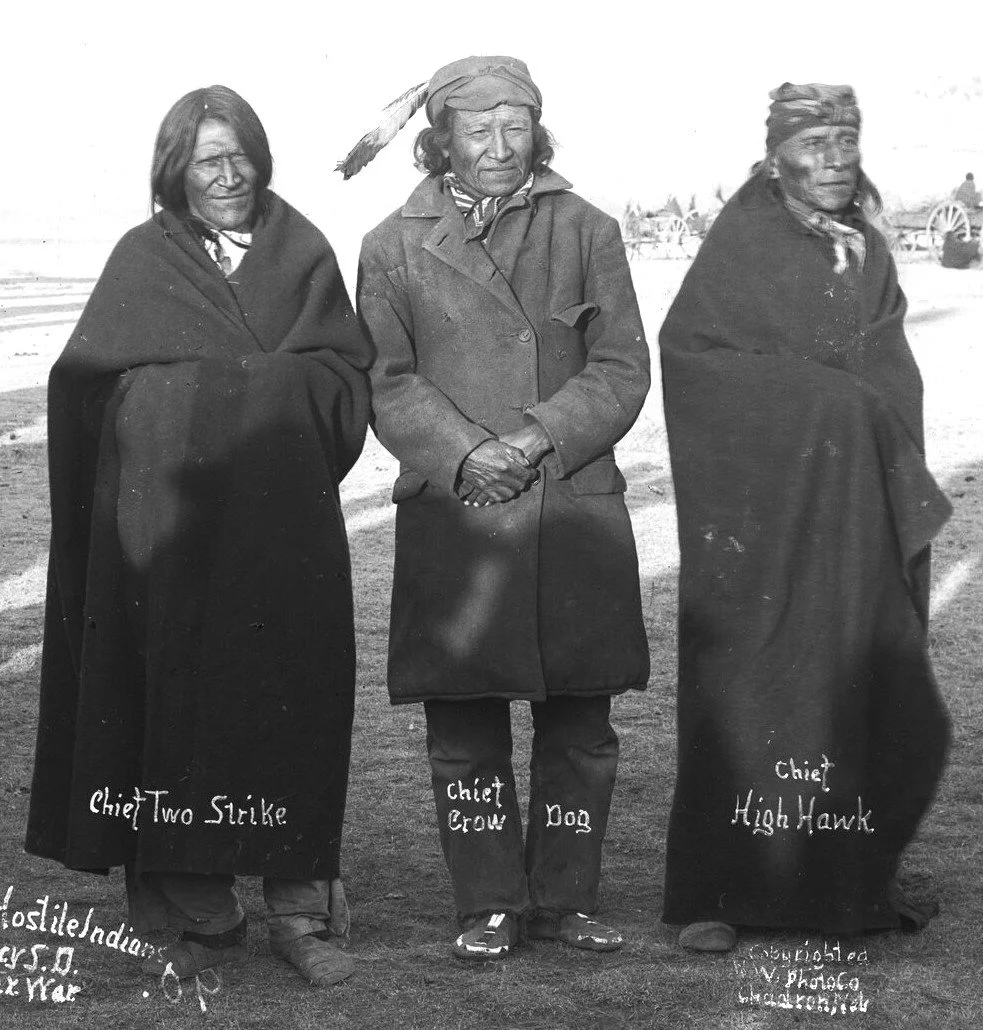
This Inglorious Indian War
On November 17, 1890, Major Guy V. Henry of the 9th Cavalry, commander of Ft. McKinney, Wyoming, received a telegram ordering him to the Pine Ridge Reservation in South Dakota. Two days later, Henry and D Troop of the 9th Cavalry, commanded by my great-great-grandfather Cpt. John S. Loud, set off on the roughly 300-mile journey to the lands of the Lakota people. The 9th Cavalry’s D Troop were not the only soldiers ordered to proceed to South Dakota at that time.

Thorough, Practical, and Refined
As I wrote in a recent post, my great-grandfather Frank Barnhart was an oil driller who worked the North Texas oil boom. At the time, my grandmother Dorothy Barnhart was 11 years old, ready to start 6th grade, and Frank and his wife felt that an oil boom town wasn’t the best place for her to get an education. They decided to send her to boarding school at Our Lady of Victory Academy, a Catholic girls’ school in Ft. Worth, Texas.

Drilling Rigs and Boomtowns
When I was in high school, I went on a summer program to England. That was during the era of the television show Dallas, and as a Texan, I got the usual questions about horses, cowboys, and oil wells, none of which I knew much about. The funny thing is that my family, like many others in the state, actually does have a strong connection to the Texas oil industry. In fact, my Barnhart great-grandparents would never have come to Texas if it hadn’t been for the lure of “black gold.”

Refugees in London
When I think of early immigration to the United States from the part of Europe that is now Germany, I tend to think of German settlers in Pennsylvania, many of whom were religious dissenters like the Mennonite ancestors I have written about in a previous post. As a result, I was quite surprised to learn that my seven-times great-grandfather, Johann Henrich Krantz, arrived in New York in 1710 and settled along the Hudson River in Ulster County. As I learned more about why he arrived when and where he did, I came to see many parallels between his experience and that of refugees and asylum seekers today.