The Long Road to Independence
Guest Post by Kathleen M. O'Brien

A small, brown paper bag filled with mostly unlabeled, curling photos revealed history that I had never learned about in school. My grandfather, Louis A. Hoch, was a career U.S. Army officer. I knew that he had been stationed in the Philippines for a short time, but I knew nothing else about that period in his life.
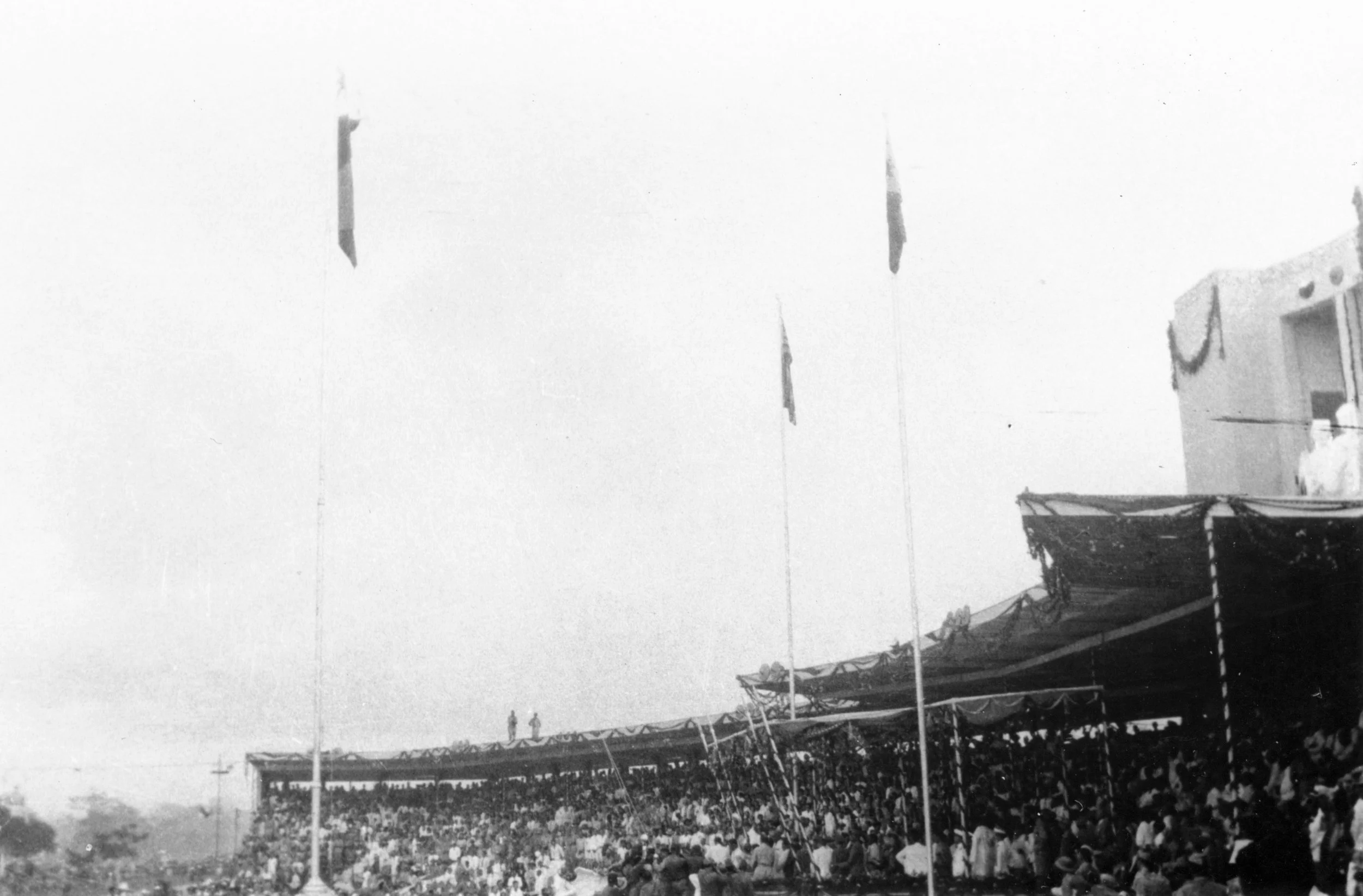
Lowering of the U.S. flag and raising of the Philippines flag. Philippines Independence Ceremonies. July 4, 1946. Manila, Luzon, Philippine Islands. Hoch family photo.
Americans understand the fierce desire for independence. We're taught it in school. It forms major themes in our entertainment and our politics. We see other people around the world trying to hold onto their independence or gain it, all at great cost. So, when a country finally achieves independence after over 300 years, it's a culmination of much struggle and effort and certainly deserves a massive celebration. Just such an event is what I was looking at in those snapshots from 1946: the celebration on the day that the Philippines finally became independent.
The Republic of the Philippines is an independent country consisting of over 7,000 islands (Herre 1927). It is located east of the South China Sea in the Pacific Ocean, southeast of China, south of Japan, and north of Indonesia and Australia. Surrounded by land masses such as China, it's hard to comprehend the size of the Philippines until you can see it in comparison to a portion of the U.S as shown in the map below.
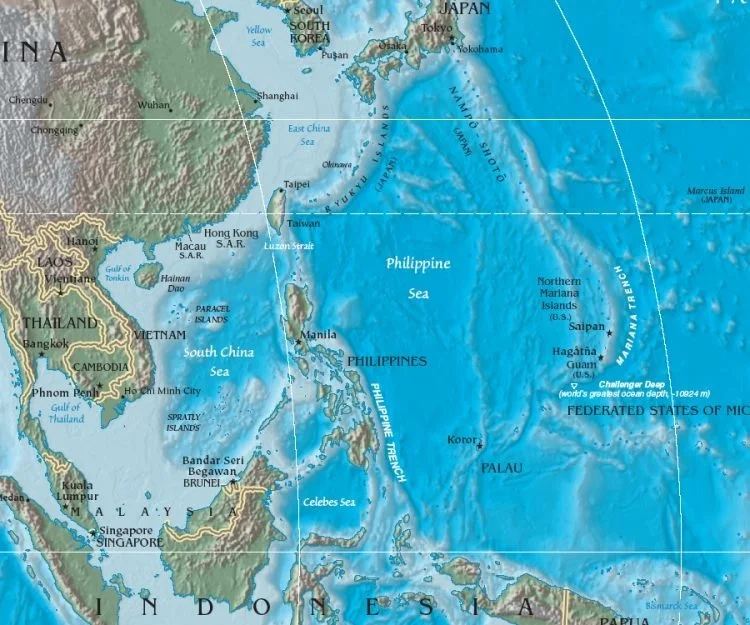
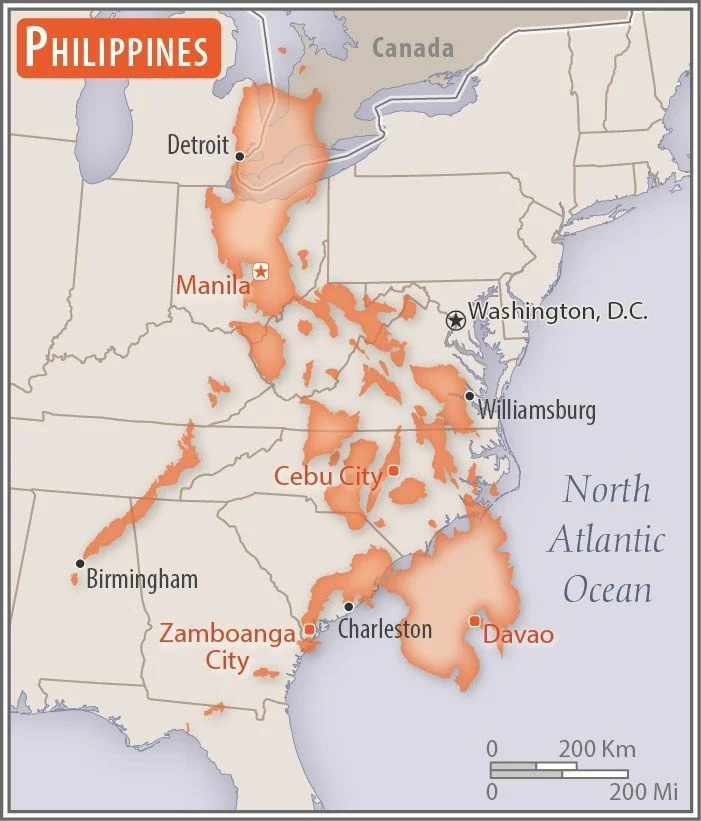
(left) Map showing the Philippines in relation to other locations in the western Pacific Ocean. Map from CIA World Factbook. Image from Wikimedia Commons.
(right) Map showing the Philippines superimposed on the eastern portion of the U.S. Map from CIA World Factbook. Image from Wikimedia Commons.
Prior to their discovery by Ferdinand Magellan in 1521, the islands of the Philippines already had a complex history. Migration over centuries, combined with the geographic separation inherent in an area of over 7,000 islands, had resulted in a diverse mix of indigenous peoples of varying ethnicities, languages, and even religions, including Hinduism and Islam. Trade with China, Jolo, and Borneo occurred regularly prior to arrival of the Spanish (Barrows 1905).
The Spanish created their first permanent settlement in the Philippines in 1564 after conflicts with indigenous peoples on multiple islands. From this point, Spain treated the thousands of islands of the Philippines as a single colony. By the 1890s, Spain's power had diminished, and the Philippines was one of their last major colonies. Cuba, another Spanish colony, rebelled in 1895 and the Philippines Revolution began in 1896. In April of 1898, the United States intervened in Cuba, beginning the Spanish-American War. On June 12, 1898, the Philippines declared independence. However, Spain did not recognize their independence and ceded the Philippines to the U.S. on December 10, 1898, as part of the Treaty of Paris, which ended the Spanish-American War (Benitez 1926; Jose 2021).
From this point, the Philippines were a U.S. territory. However, such a simple statement does not do justice to the complexity and conflict involved in the relationship. The people of the Philippines had fought for their independence and were committed to it. After declaring independence, the Philippines had formed the First Philippine Republic. Fighting began in Manila between American and Filipino forces on February 4, 1899, initiating the Philippine-American War (Benitez 1926). Though the U.S. declared the war over on July 4, 1902, guerillas and resistance groups fought until 1913 (Philippine Hostilities 1948).
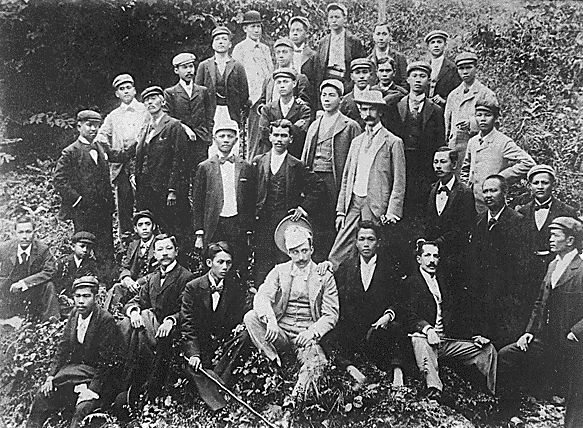
Emilio Aguinaldo, president of the First Philippine Republic (seated 3rd from right), and other Insurgent leaders in 1900. Image from the U.S. National Archives and Records Administration, Record Group 391: Dept. of War, Records of U.S. Regular Army Mobile Units, 1815-1970, Series: Philippine Islands, compiled 1896-1906.
Even with the war officially over, the people of the Philippines were still focused on independence. The Philippine Organic Act, passed in 1902, provided for the creation of a Philippine Assembly once insurrection ended, a census was taken, and two years of continued peace and recognition of U.S. authority had occurred. Elections for the Philippine Assembly were held in 1907 (Benitez 1926). Beginning that year, the Philippine Assembly (followed by the Philippine Legislature) passed resolutions for independence every year (Storey & Lichauco 1926). In 1916, the Philippine Autonomy Act was passed by the U.S. Congress, stating a goal of eventual independence of the Philippines subject to the establishment of a stable government (Benitez 1926).
The Philippines paused their push for independence during World War I but resumed in 1919 with the first of eleven "Independence Missions" to Washington, D.C., to "call for concrete steps towards independence” (Jose 2021). At first, the missions were funded by the Philippine Legislature. In 1924, the Insular Auditor (the only American in the Bureau of Audits) questioned the legality of public funding of such missions, which led to the U.S. Attorney General ruling it illegal. However, these rulings did not stop the missions. A movement arose to raise the needed funds via popular subscriptions and the next mission proceeded in 1925 (Mayo 1925; Woods 2005).
Finally, in 1934, Congress enacted the Philippine Independence Act. The Philippines would become an independent country after a ten-year transition period. During this time, their government would be a commonwealth intended as a transitional administration preparing for full independence. The date for their independence was set as July 4, 1946 (Annual Report 1935). The Philippines had made significant progress by 1940, which can be seen in a film at the National Archives. It's eerie to watch it now, knowing that war was just around the corner.
These transition plans were derailed when the Japanese invaded the Philippines just hours after the attack on Pearl Harbor, overrunning all of the Philippines in 1942 (Jose 2021; Morton 1953). The capture of the Philippines was considered a significant threat to the U.S., leading to a campaign to liberate the Philippines from the Japanese that began in 1944. This campaign included a number of 1945 battles in the Pacific theater that I had heard of but had not realized were related to the Philippines. These included the Battles of Bataan, Corregidor, Luzon, and Manila (Breuer 1986).
Fighting in the Philippines was ongoing and brutal throughout World War II. An estimated one million Filipinos died (out of a population of about eighteen million). The capital city of Manila was devastated. Even after Japan surrendered in 1945, Japanese troops in the Philippines, who were unaware of the surrender, continued to fight for nearly a year (Jose 2021).
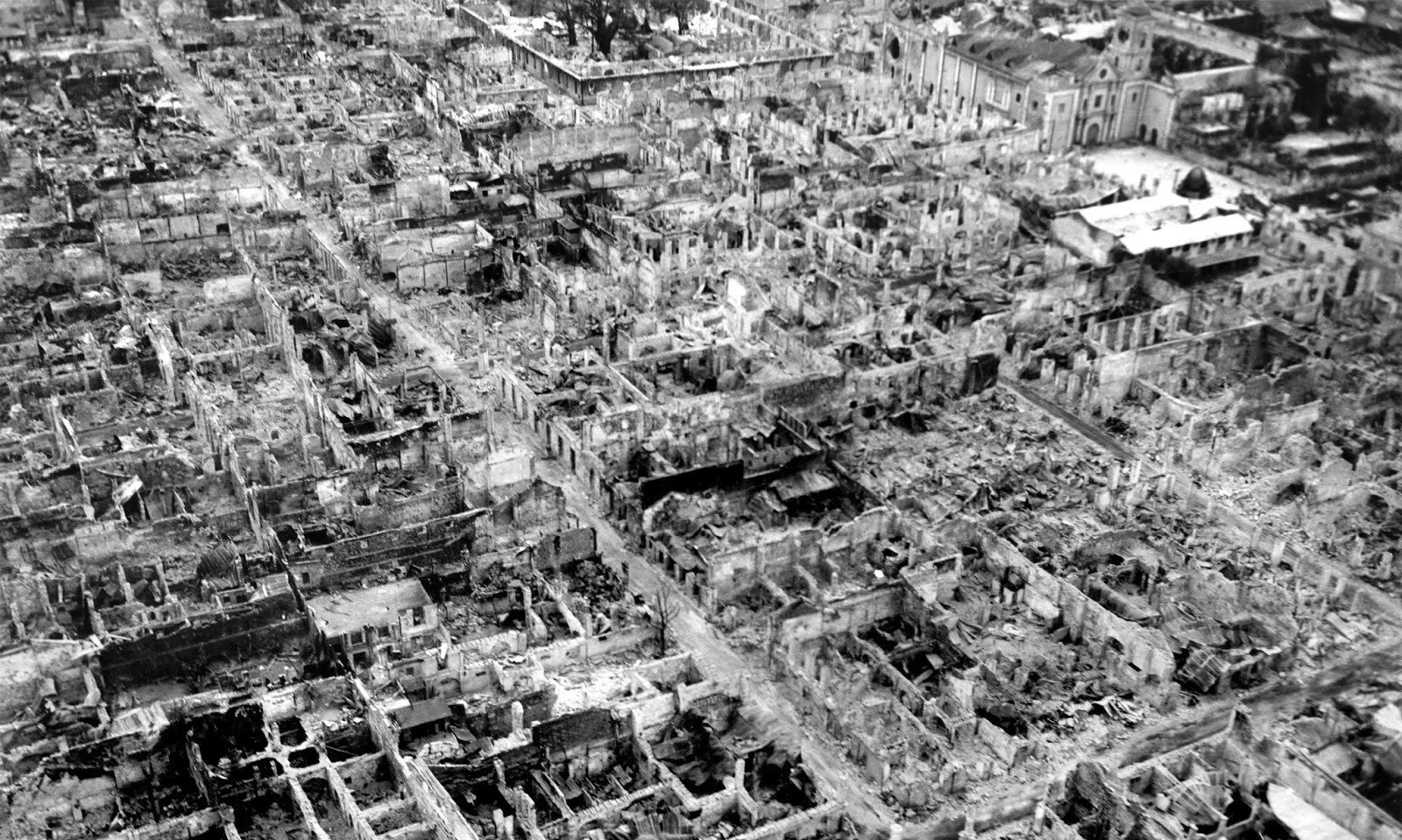
Destruction at the Walled City (Intramuros district) of old Manila in May 1945 - after the Battle of Manila. Illustration 341 in Surgery in World War II: Activities of Surgical Consultants, Vol. II, Office of the Surgeon General, Dept. of the Army, Washington, D.C., 1964. Image from Wikimedia Commons.
Following World War II, the Philippines faced infrastructure, social, and economic challenges that threatened their potential independence. Most of the major cities were in ruins. Inflation was rampant. Power, water, and communications had to be restored (Jose 2021). Some American politicians lobbied for reconsideration of Philippine independence, but the Philippines also had their supporters in Congress (Tarling 1999). Senator Millard Tydings of Maryland, co-author of the 1934 Philippine Independence Act, authored the Philippine Rehabilitation Act of 1946 to provide funds for the Philippines. However, this act was tied to a trade bill authored by Representative C. Jasper Bell of Missouri, which set trade restrictions that were clearly designed to shift profits from the Philippines government and individuals to U.S. financial interests (Schirmer & Shalom 1987; Jose 2021).
Another issue that potentially impacted independence was the treatment of Filipino veterans who had served in the U.S. armed forces. Over 200,000 Filipinos, who at that time were U.S. citizens, had served in the U.S. armed forces and fought in World War II. Over half of them had died. In February of 1946, Congress passed the Rescission Act of 1946, which stripped those veterans of their benefits. It is clear that the hearings considered loss of these benefits to be part of Philippine independence (Hearings before the United States Senate Committee on Appropriations 1946). Had the Philippines pressed for the benefits due their people who were U.S. veterans, they could well have jeopardized their upcoming independence. [1]
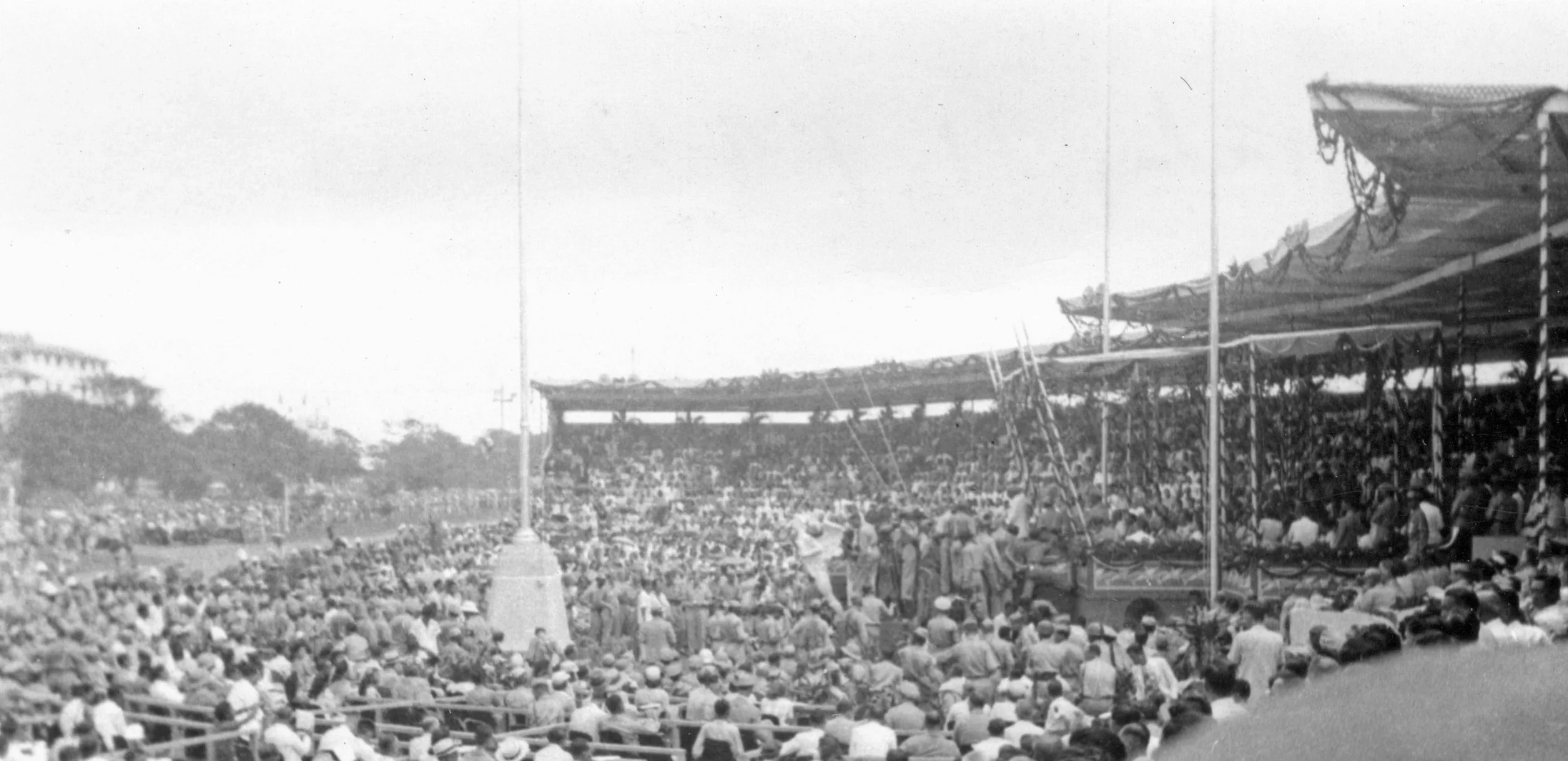
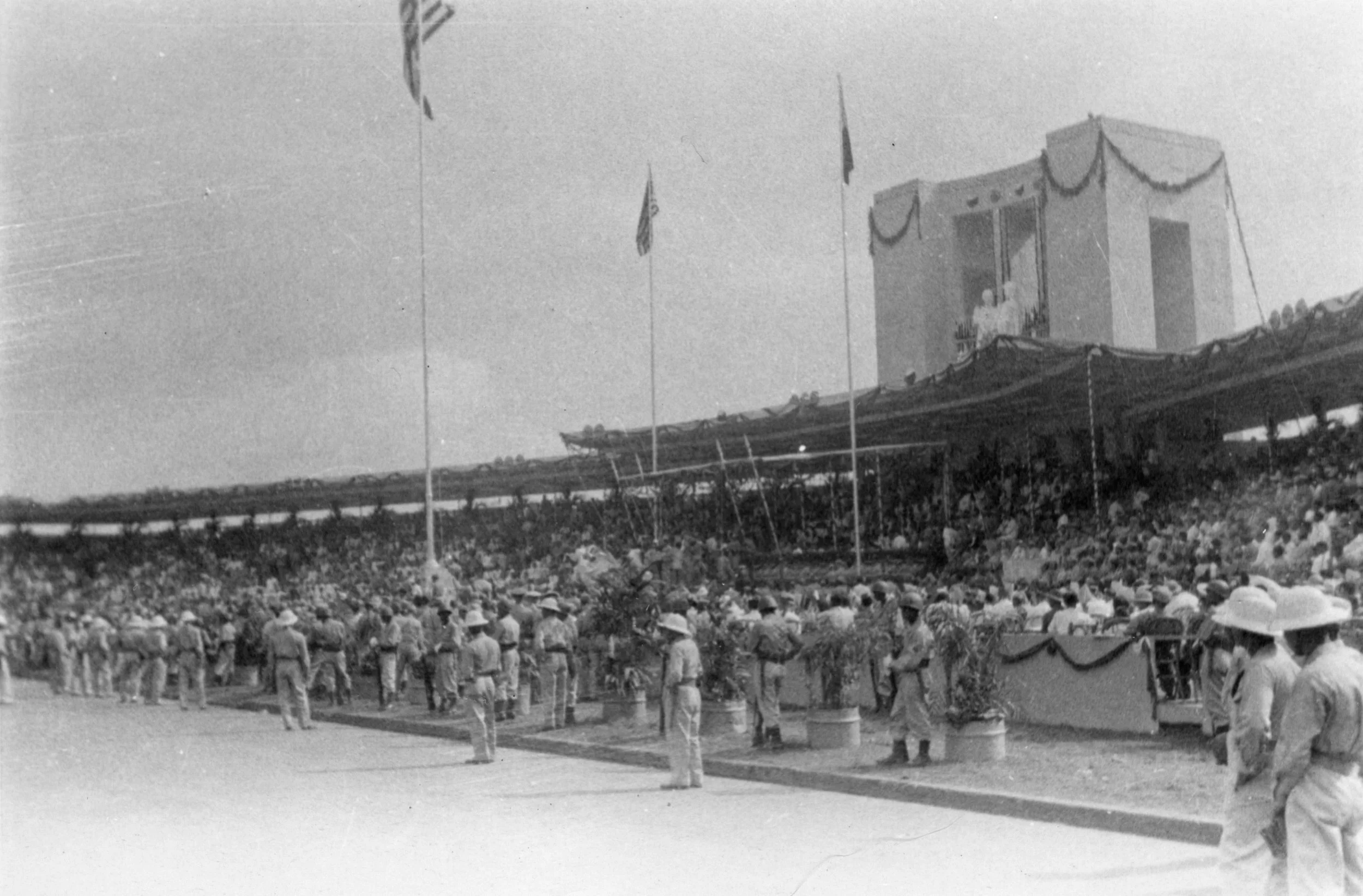
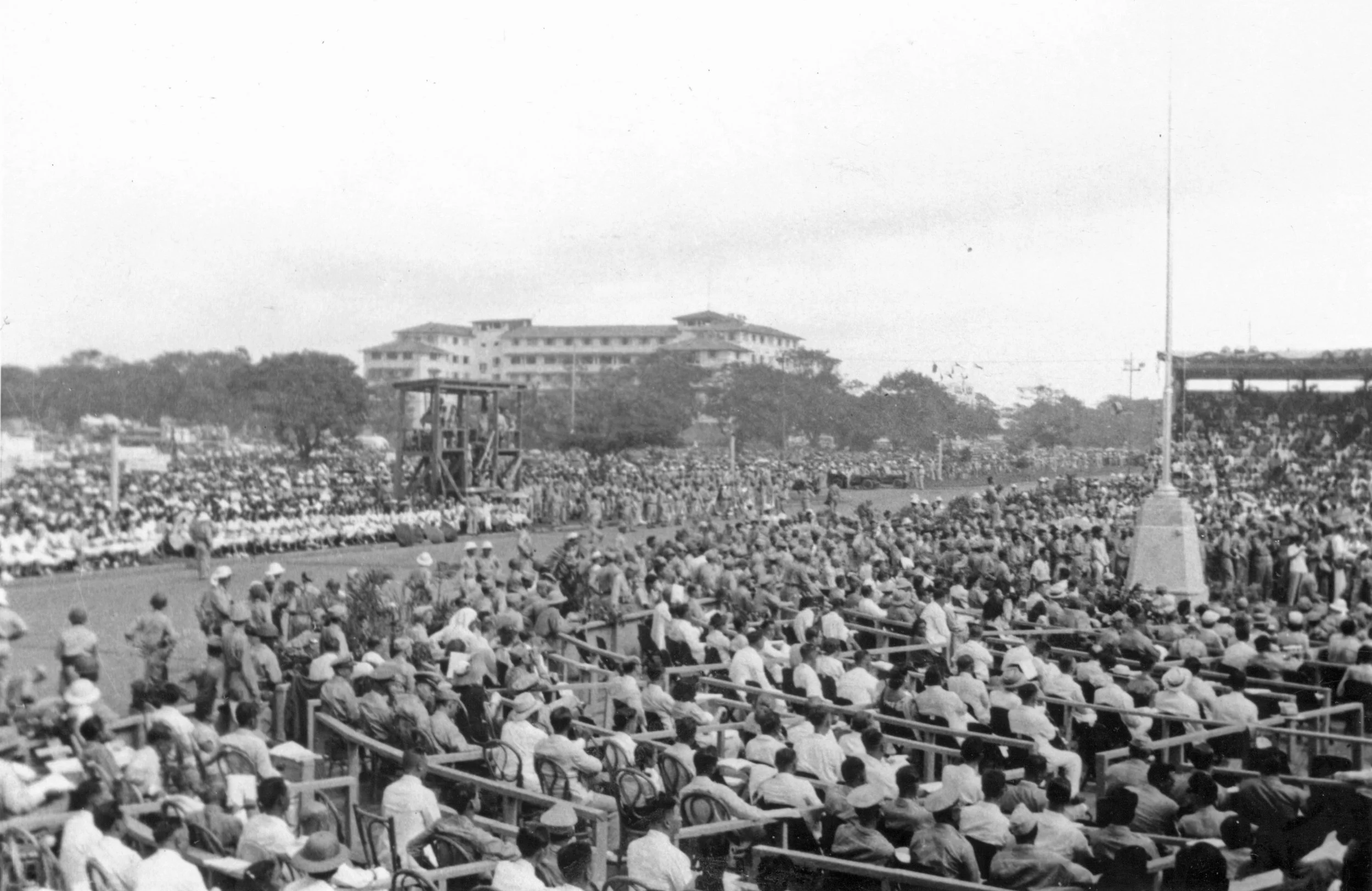
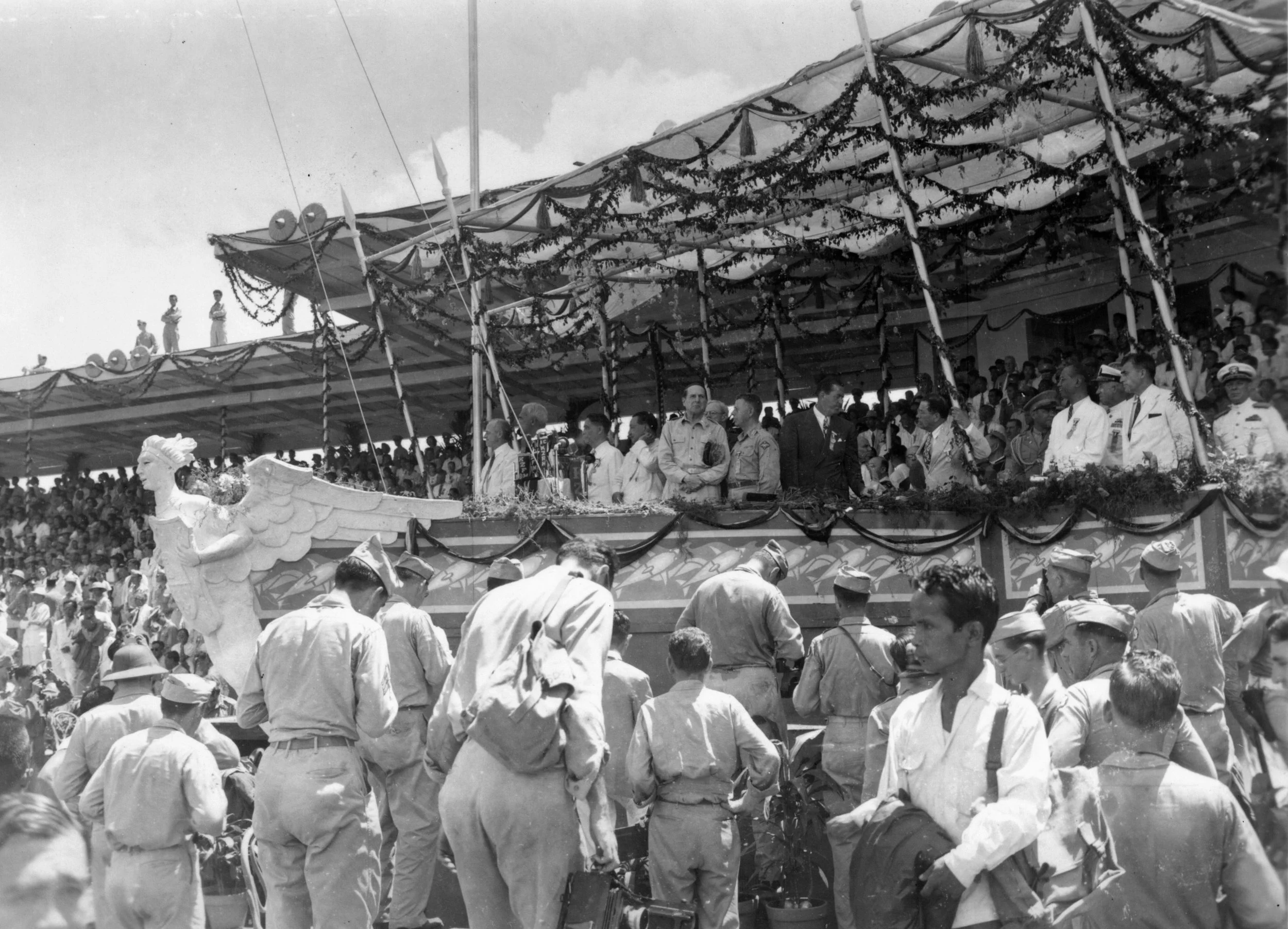
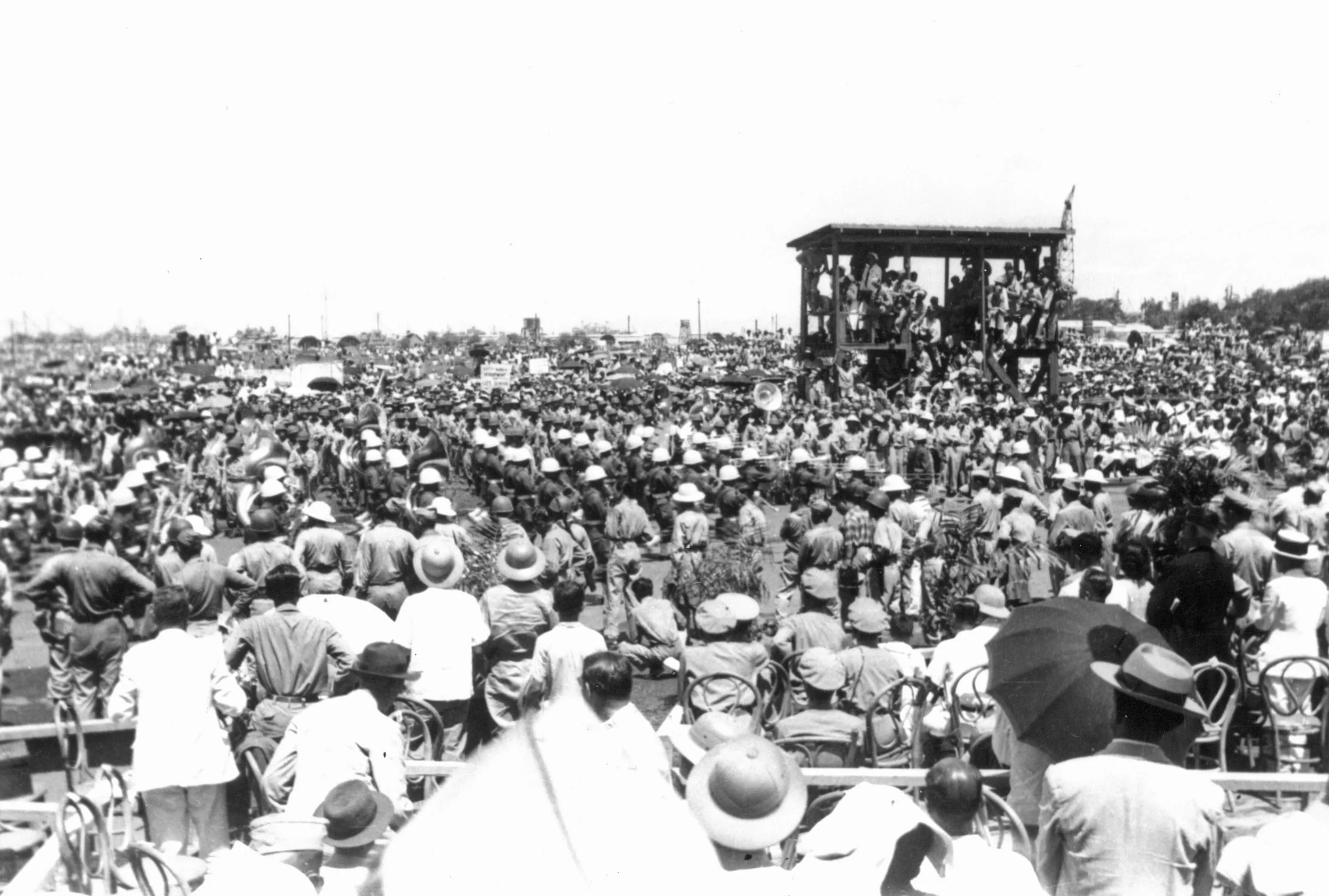
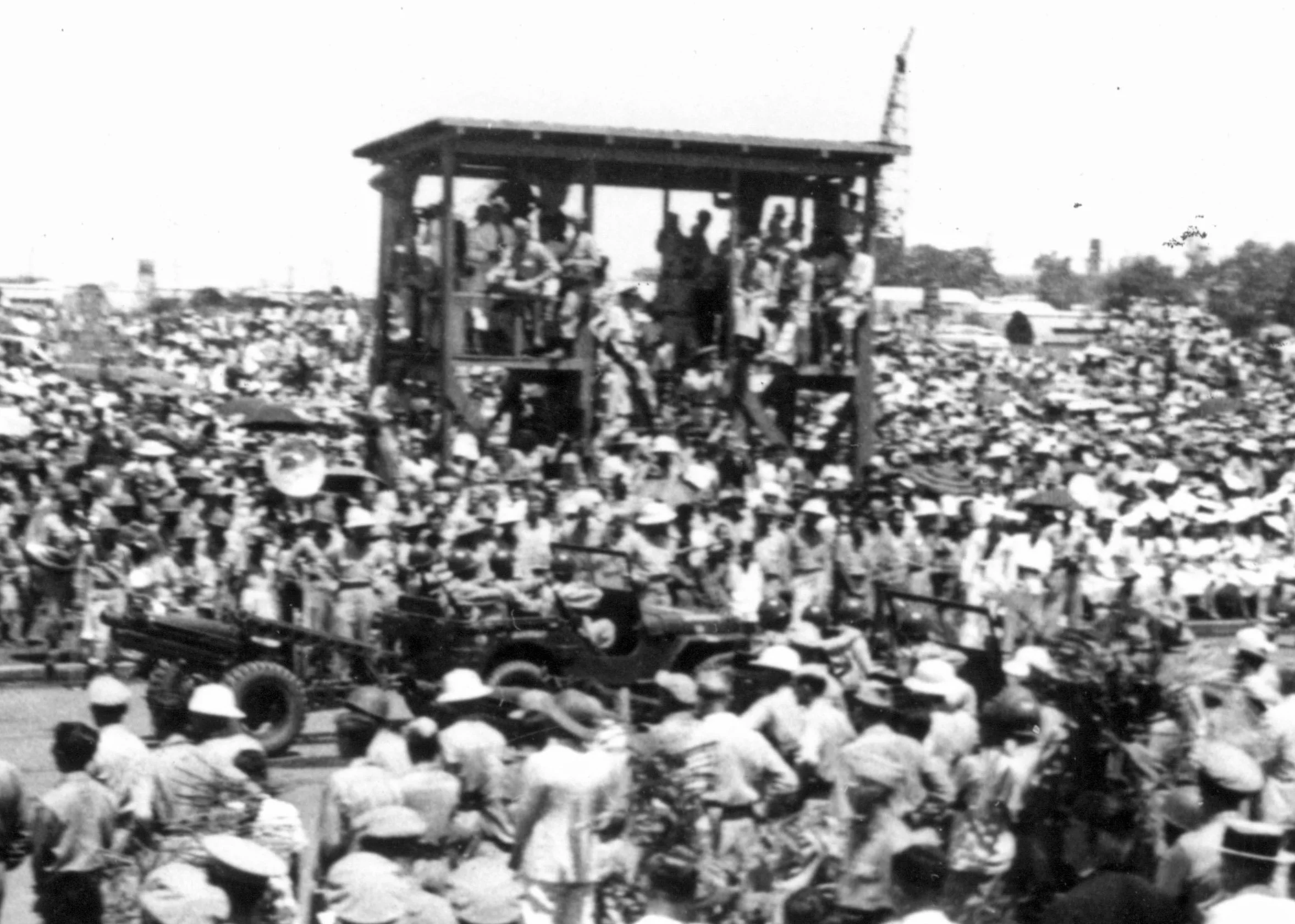
Philippines independence went forward on July 4, 1946, as had been set in law in 1934. The Philippines went all out for this event to demonstrate how important this independence was to them. To make this point, they wove symbolism throughout the entire event. It is particularly visible in the grandstand, which was designed and built expressly for the independence ceremonies, and in the order and details of the ceremonies themselves. When the time came to change the U.S. flag for the Philippines flag, both had been attached to the same flagpole cord and the top representative from the U.S. and the Philippines together pulled the cord to change the flags (Jose 2021). Each of these choices show the determination of the Philippines to be independent and honor the long road it took.
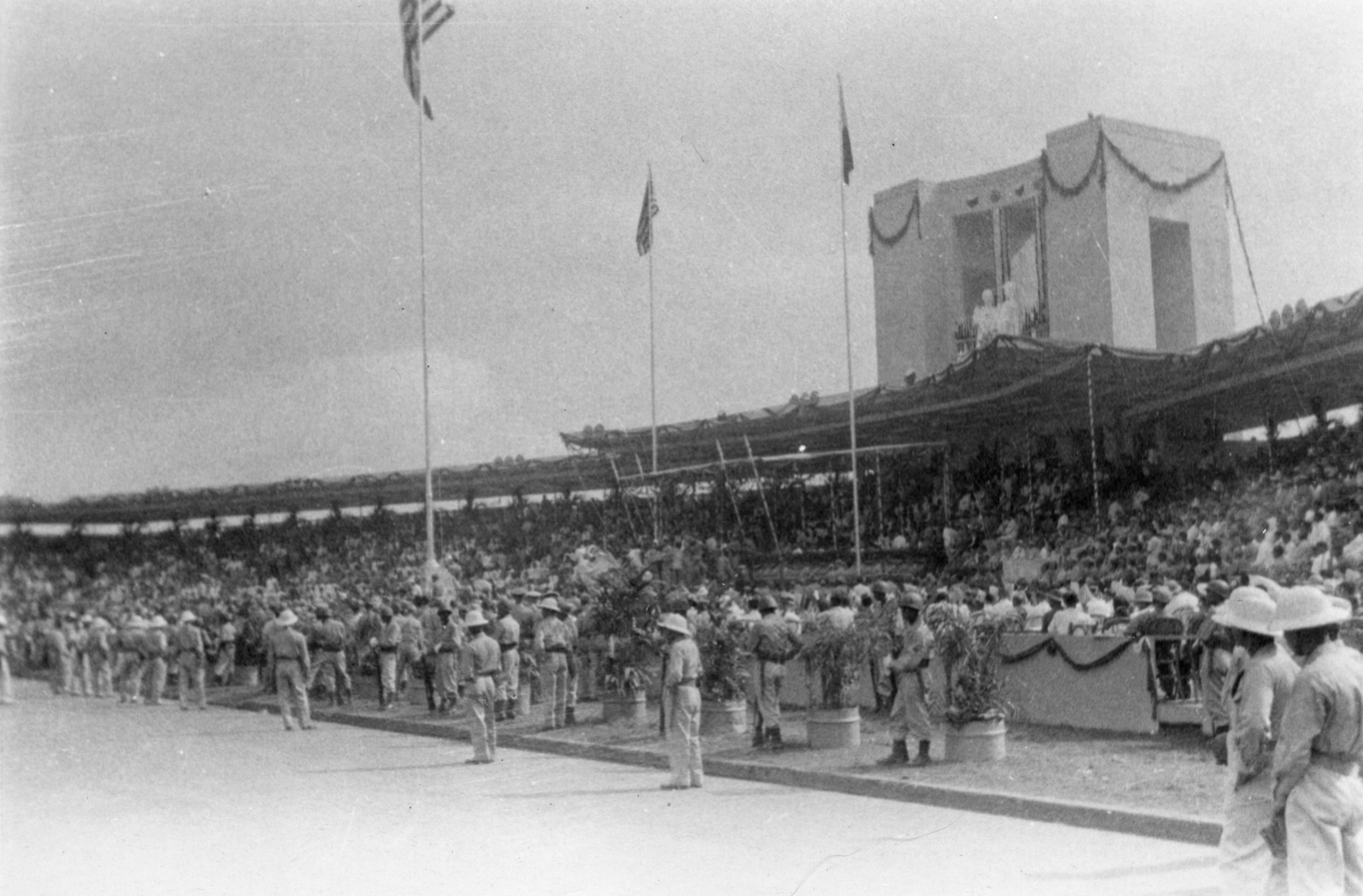
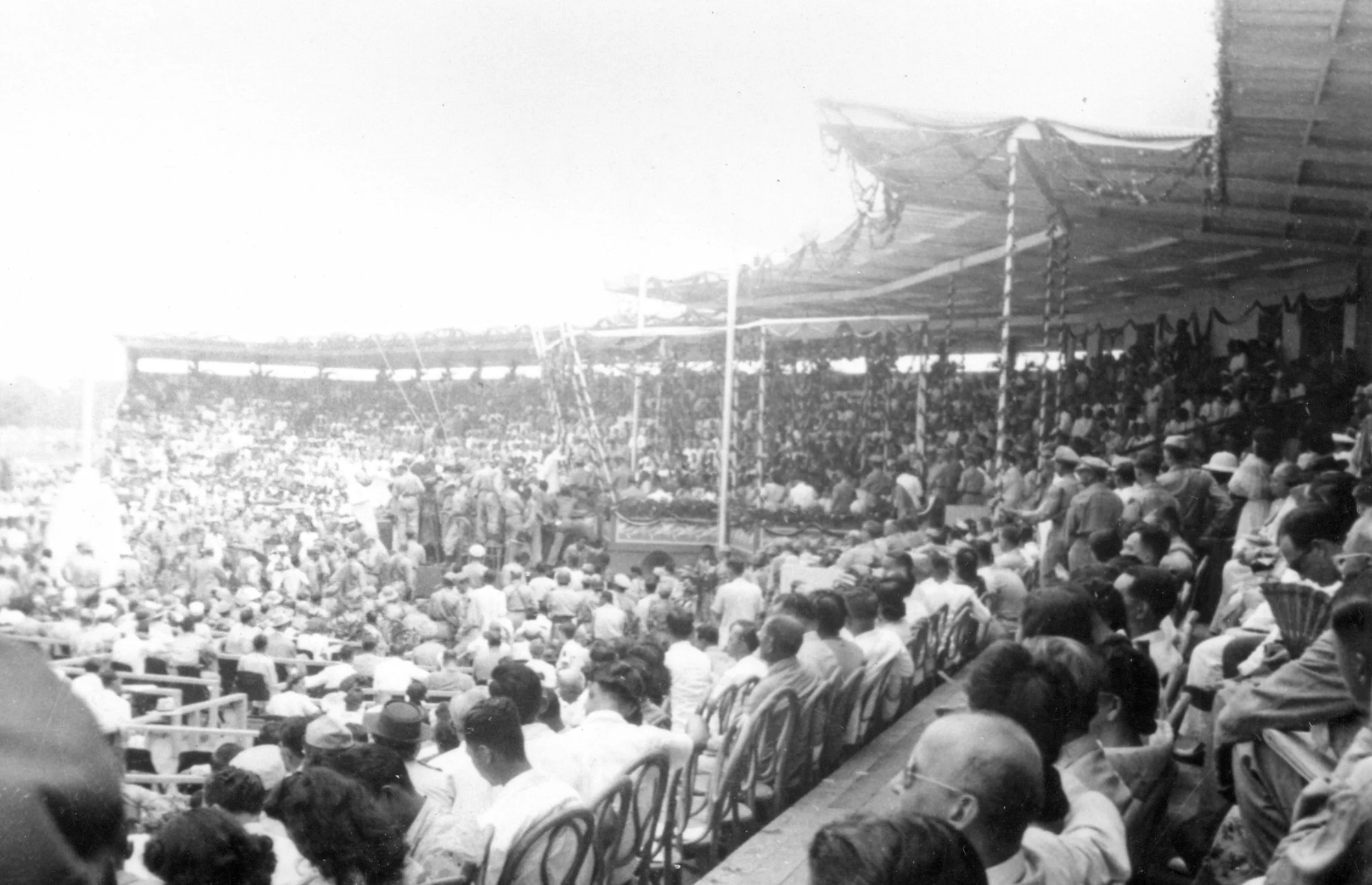
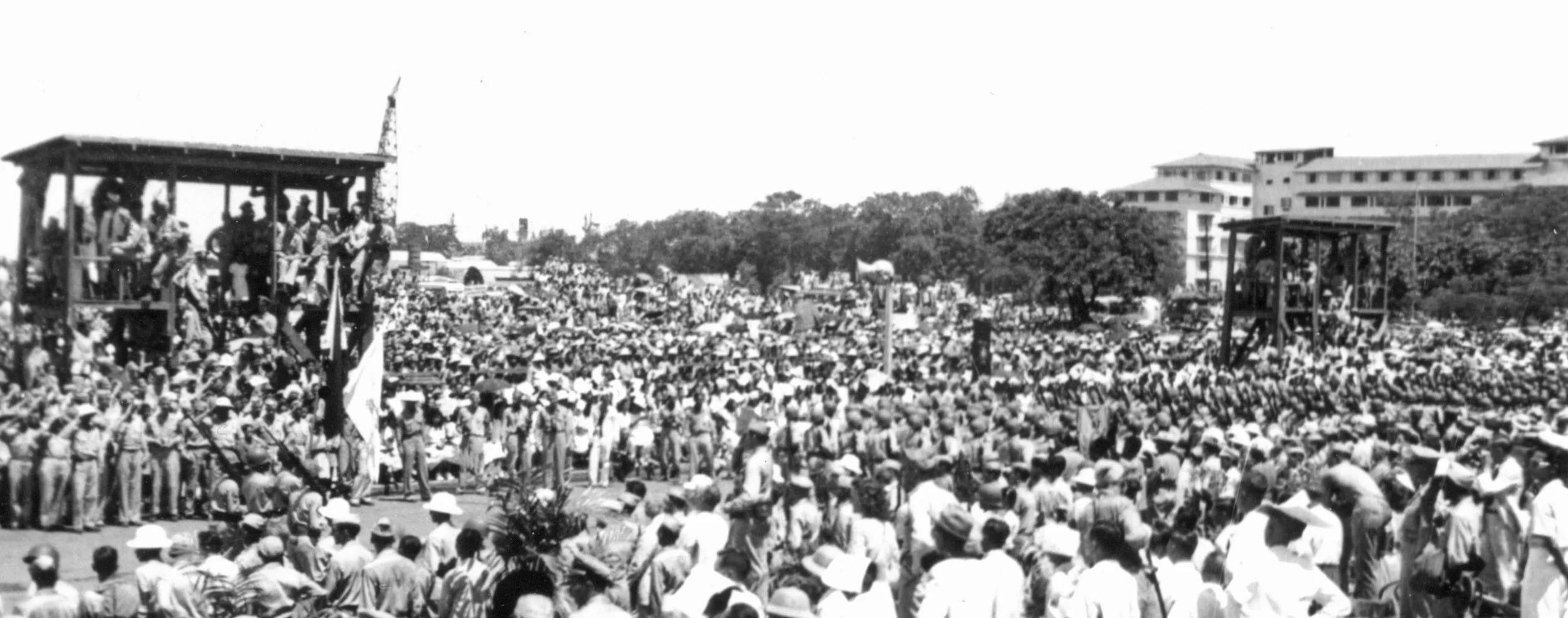
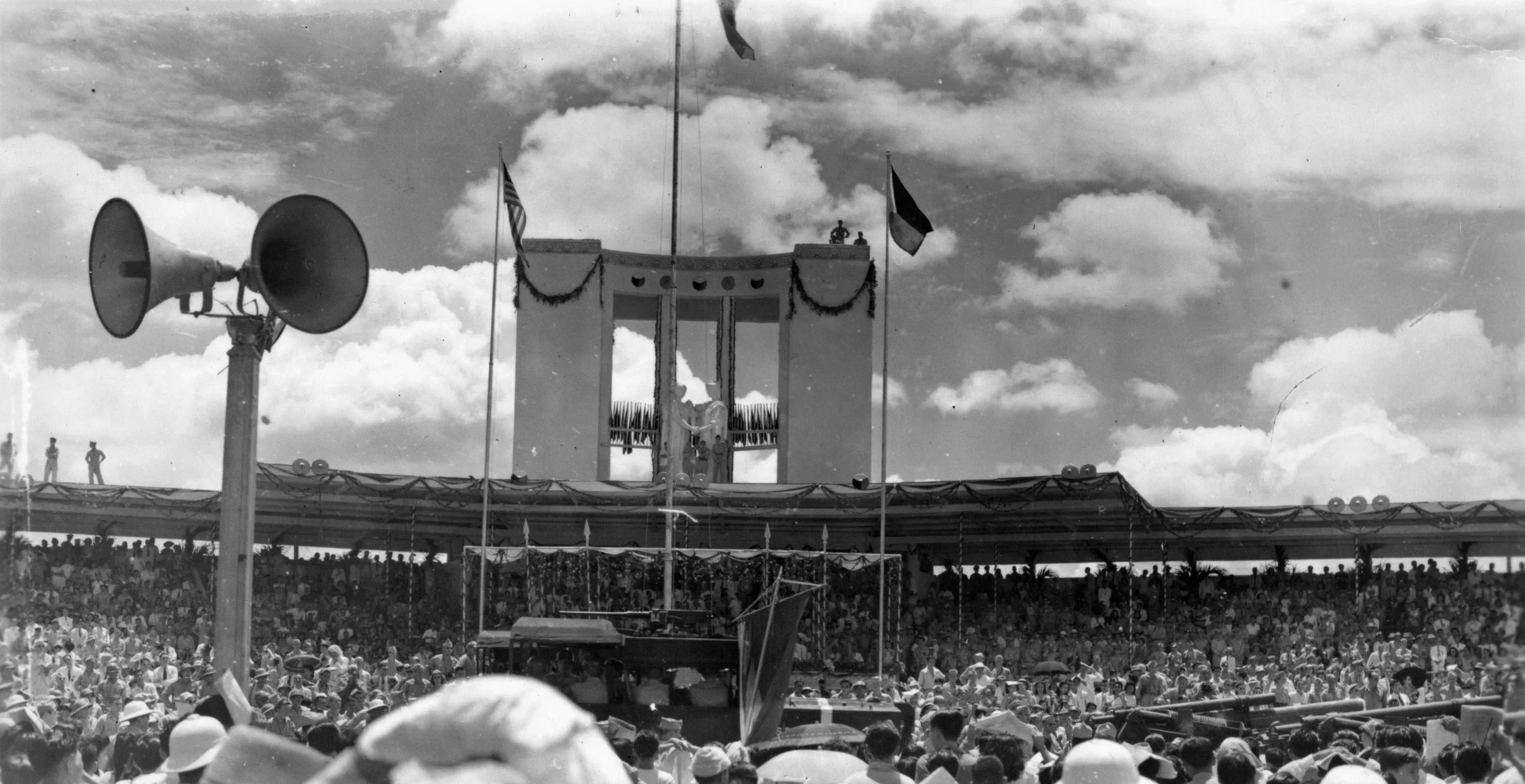
Grandstand for the Philippines Independence Ceremonies with the triumphal arch behind the grandstand. July 4, 1946. Manila, Luzon, Philippine Islands. This photo was taken early in the ceremonies as the U.S. flag is still flying on the flagpole nearest the street. Hoch family photo.
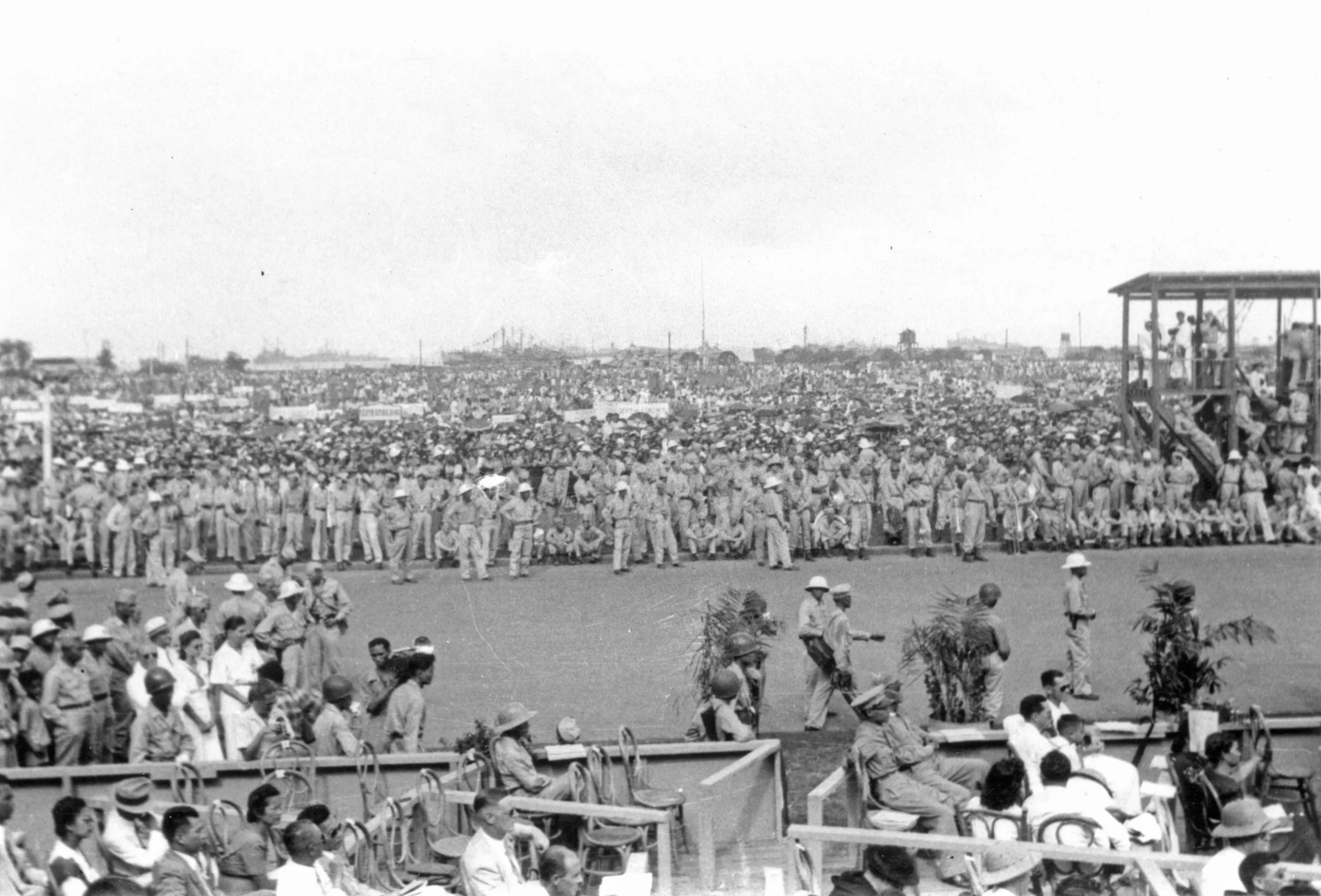
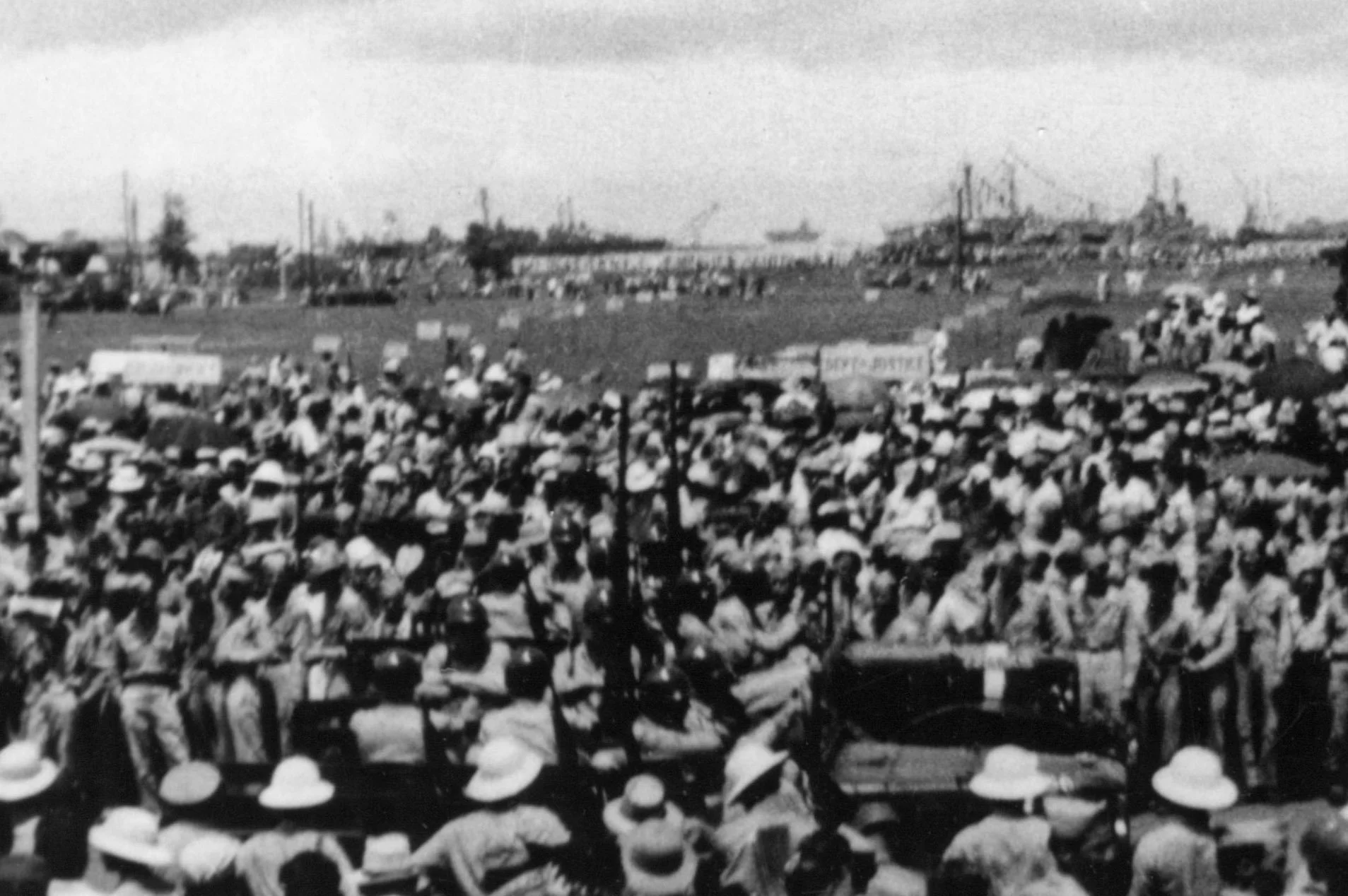
The location chosen was Luneta in Manila, overlooking Manila Bay. The ceremonies centered on a 150-foot flagpole (now called Independence Flagpole) that one source says was "erected on the spot where José Rizal, famous martyr of the Philippines fight for freedom, was executed by the Spaniards in 1896" ("U.S. Flag Lowered" 1946). Behind that flagpole was an elaborate grandstand erected directly in front of, and partially obscuring, the Rizal Monument. It was on the stage at the center of this grandstand that the independence ceremonies took place over four hours on the morning of July 4, 1946. It was estimated that about 3,000 people were in the grandstand area during the ceremonies with around 300,000 Filipinos in the crowd (Duldulao 2007).
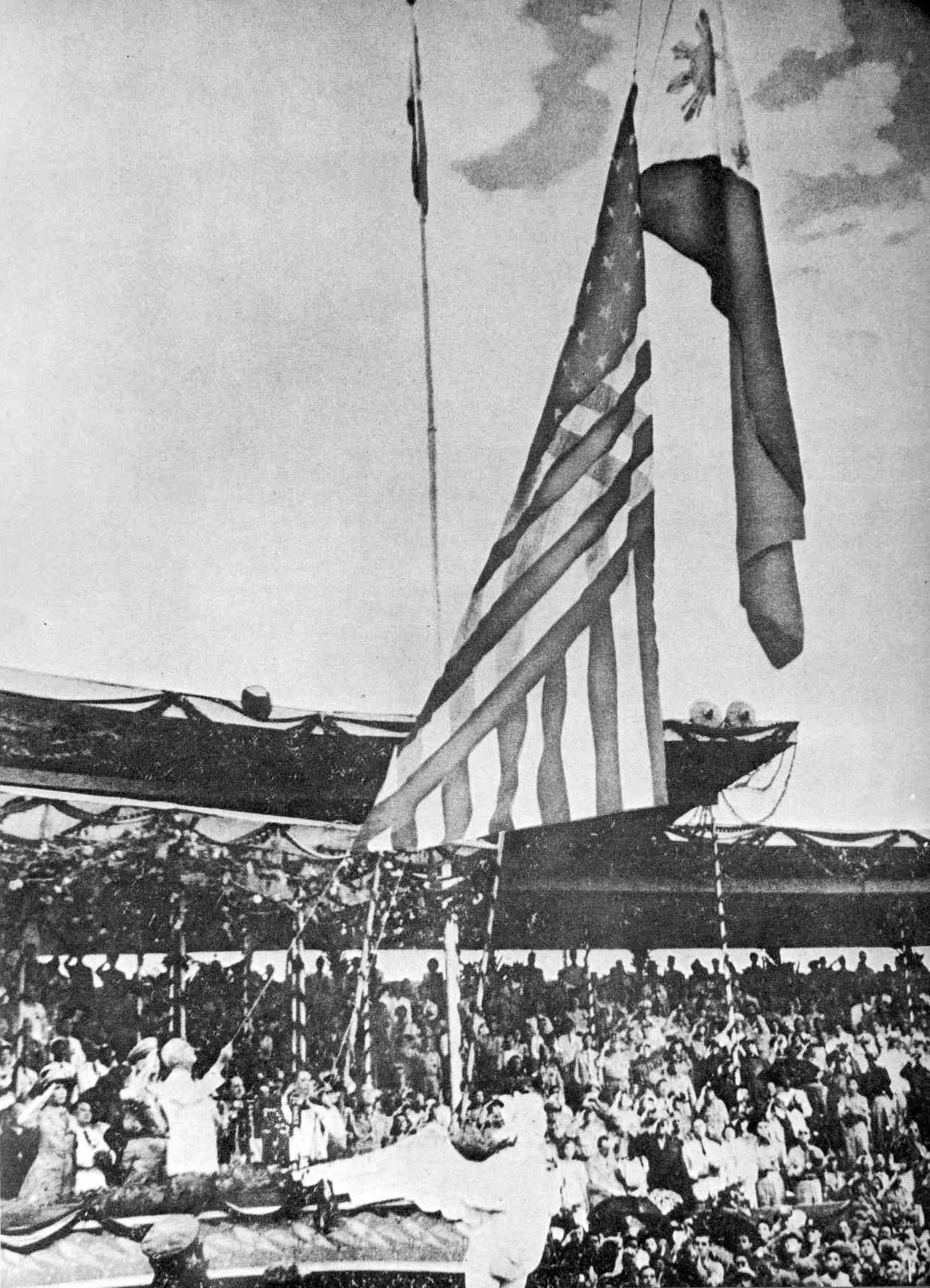
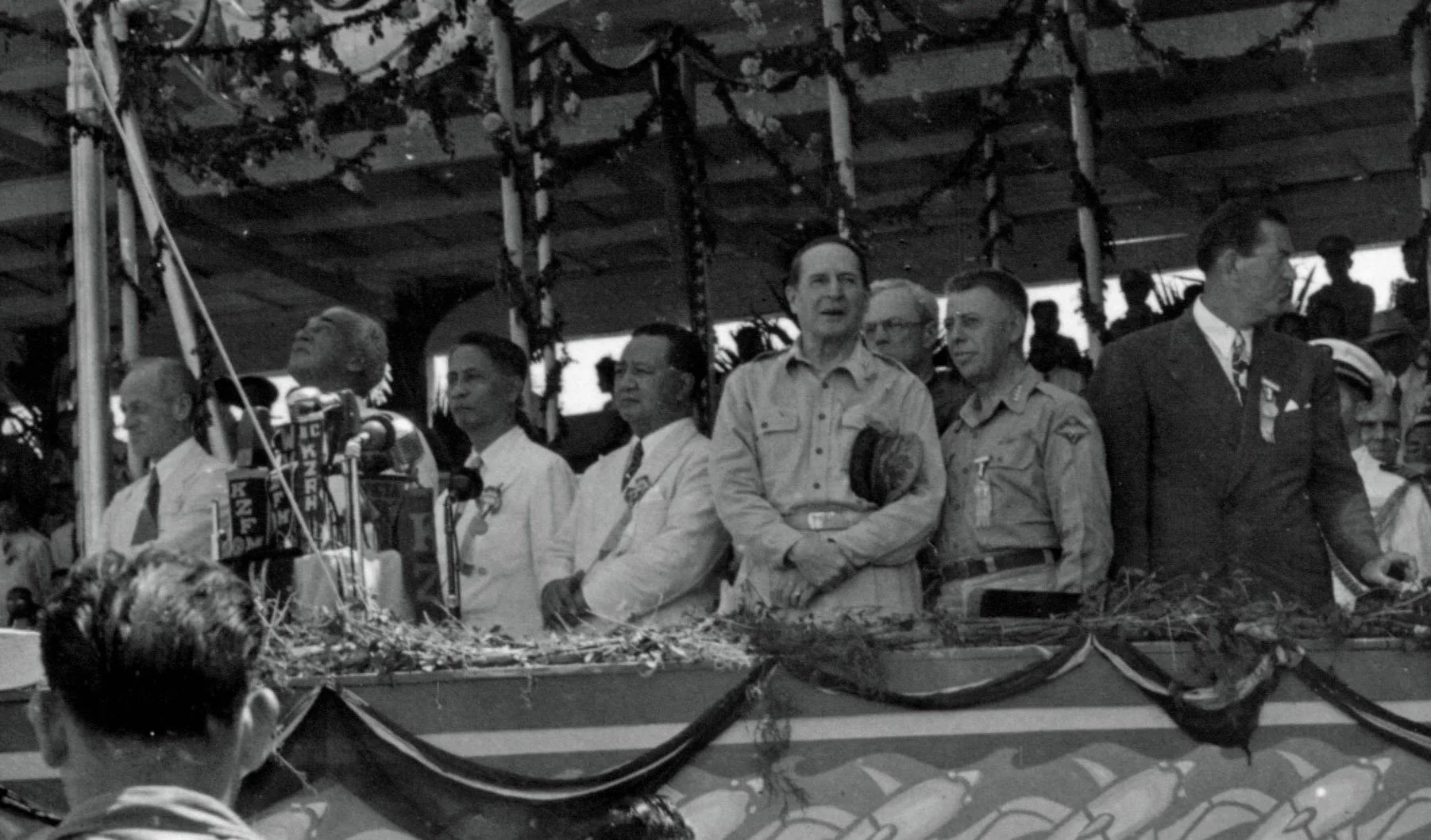
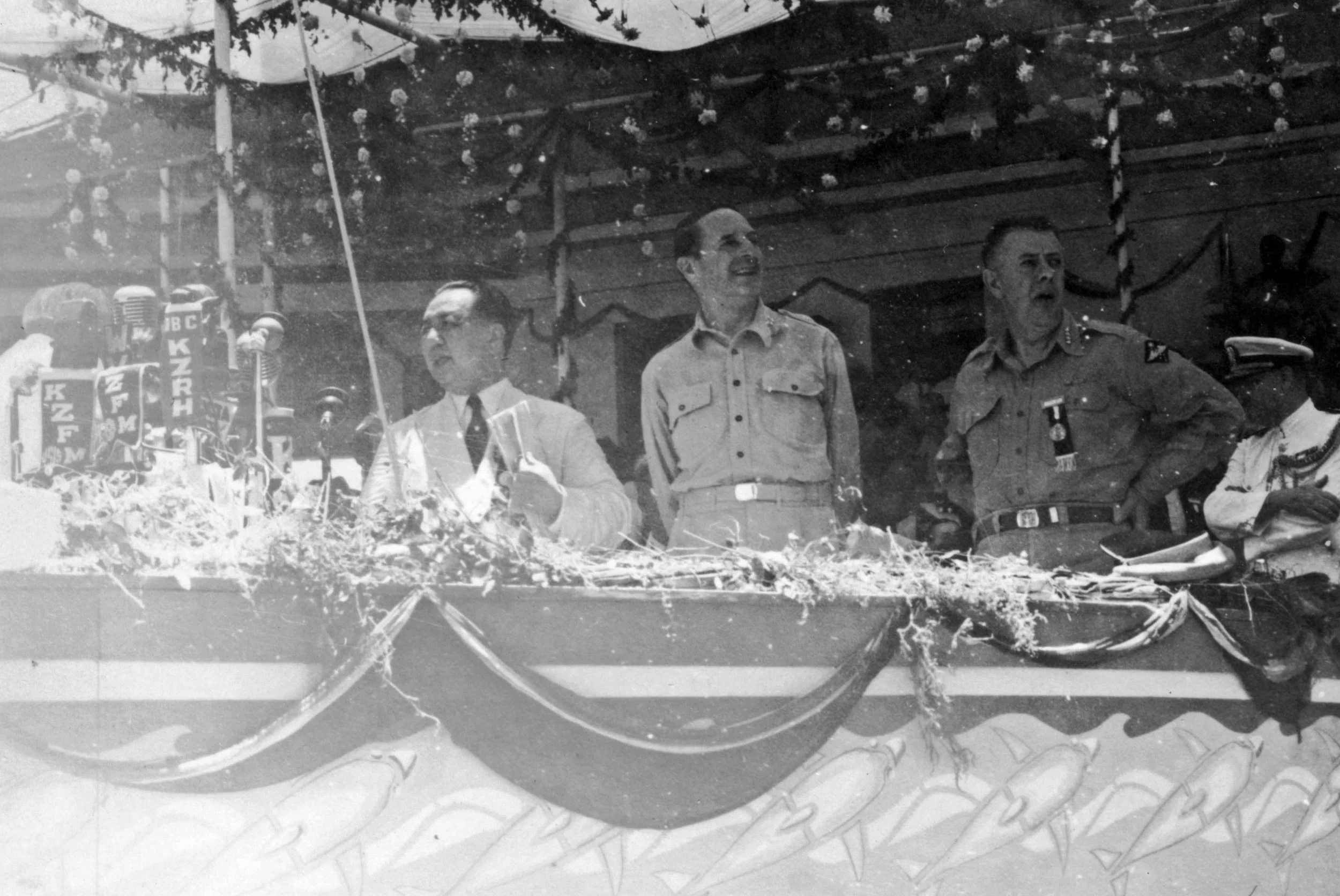
The ceremonies were extravagant and enthusiastic. Speakers included Senator Tydings and General Douglas MacArthur. High Commissioner Paul V. McNutt (afterwards first U.S. ambassador to the Philippines) read President Truman's Proclamation of Independence that withdrew all U.S. rights over the Philippines and recognized their independence. The highlight of the ceremony was when McNutt and Philippines President Manuel Roxas pulled the cord, simultaneously lowering the U.S. flag and raising the Philippines flag (Jose 2021).
U.S. and Philippines flags passing. High Commissioner Paul V. McNutt can be seen on the left (white suit, white hair) and President Manuel Roxas on the right (white suit, dark hair, behind radio microphone) pulling the cord to change the flags. July 4, 1946. Manila, Luzon, Philippine Islands. Philippine Presidential Museum and Library. Image from Wikimedia Commons.
With the Philippines flag at the top of the flagpole, warships in Manila Bay, including those of the U.S. Seventh Fleet, fired a 21-gun salute. President Roxas, followed by Vice President Eipidio Quirino took their oaths. McNutt and Roxas signed the Treaty of Manila, which relinquished U.S. sovereignty over the Philippines and established diplomatic relations. Then the band of the 86th Infantry Division (my grandfather's division) played "The Star-Spangled Banner" and more than 1,000 students sang the Philippines Independence hymn (Jose 2021).
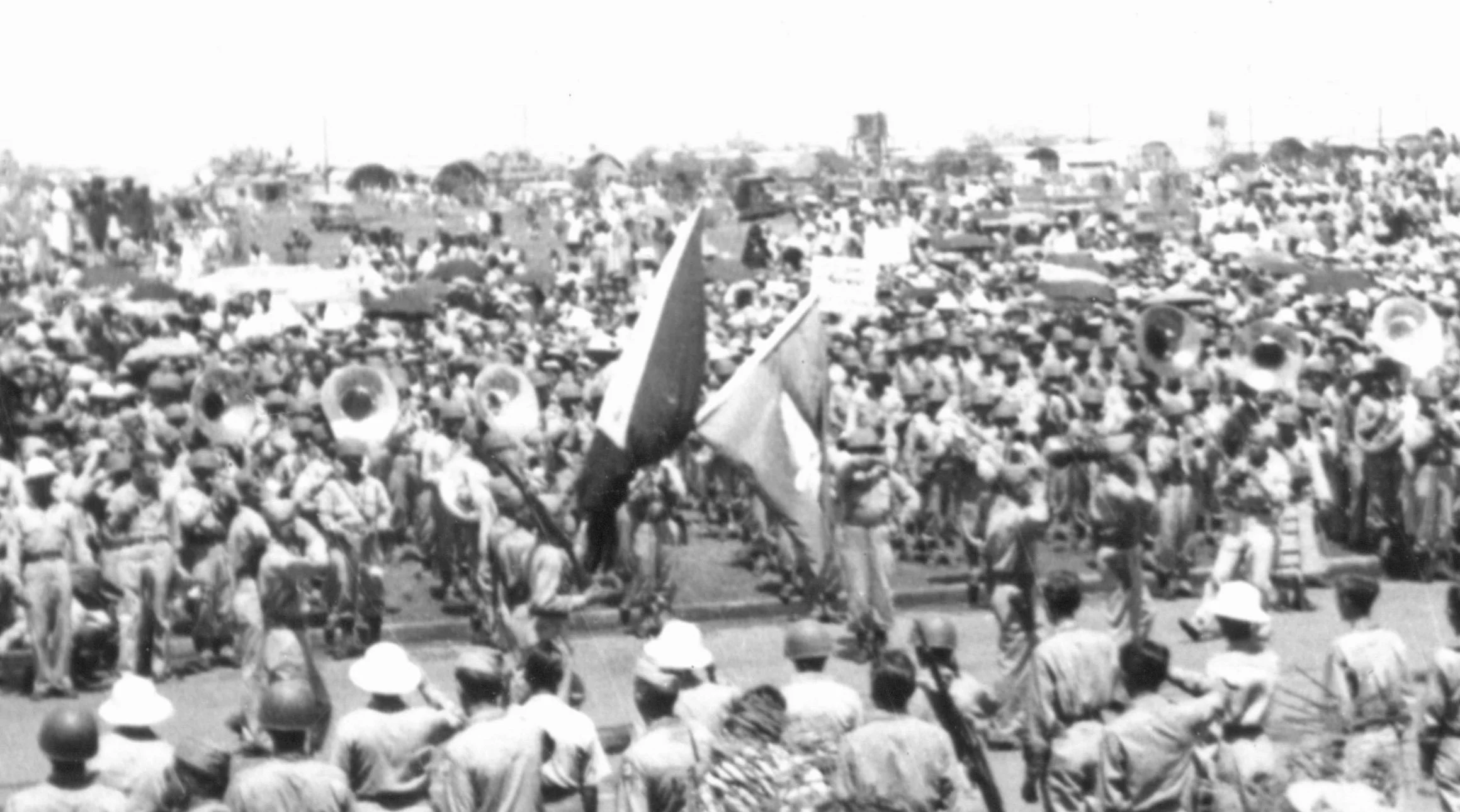
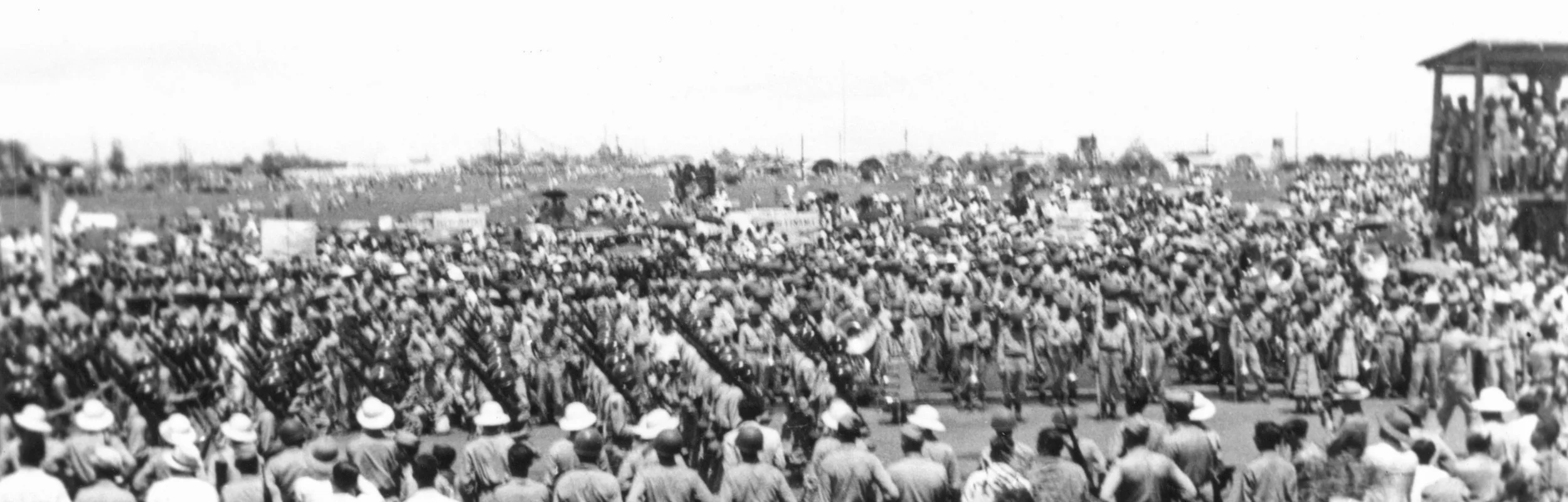
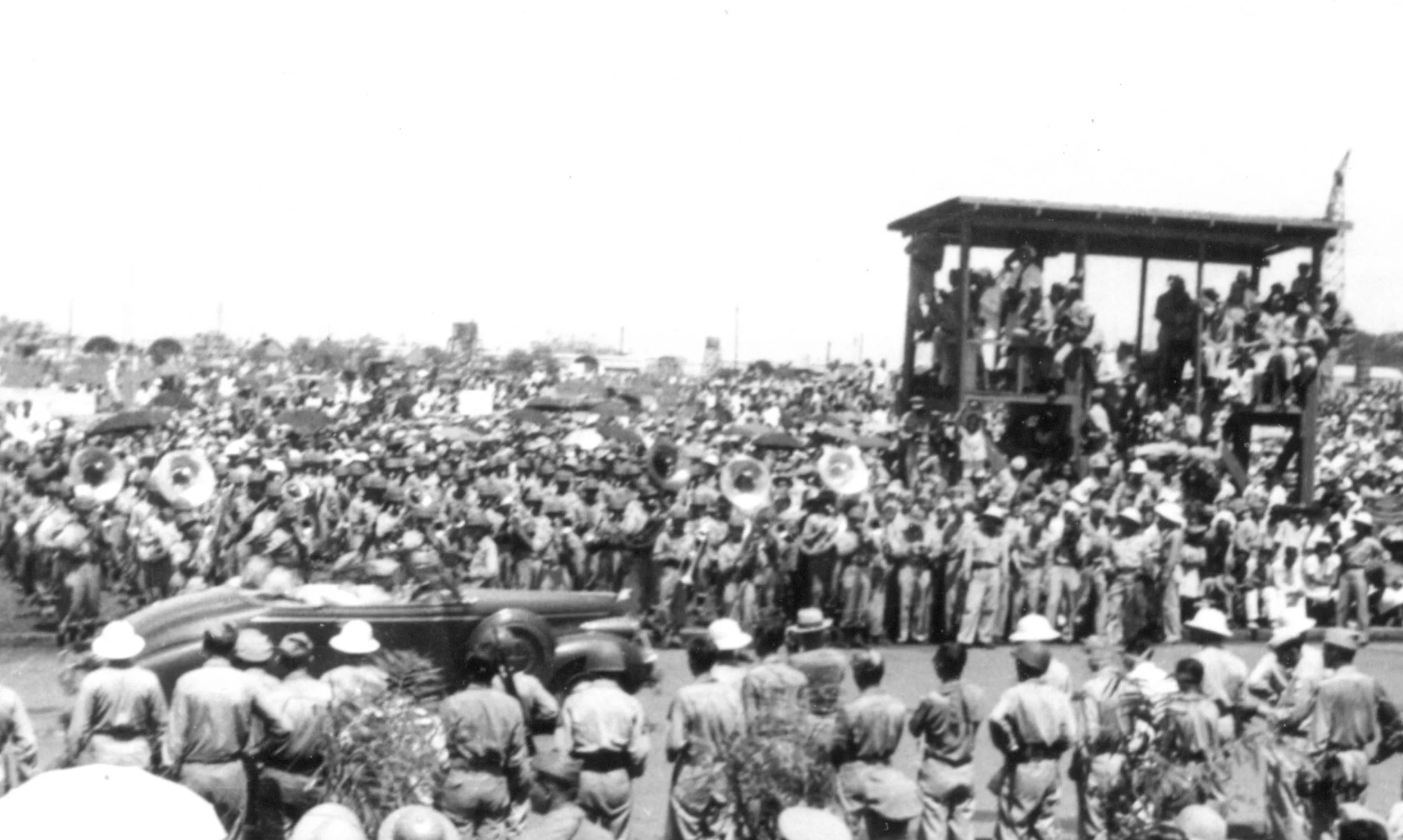
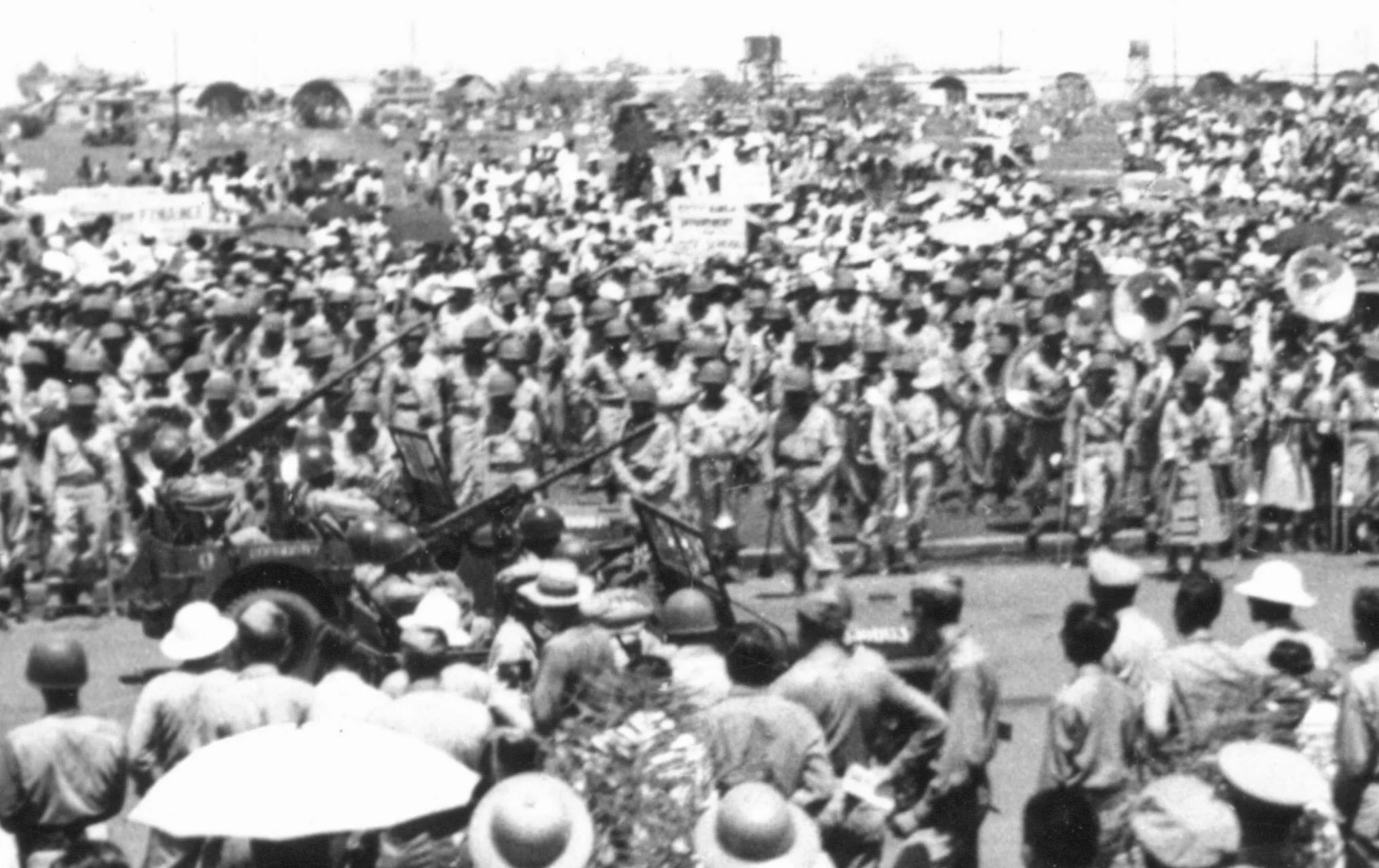
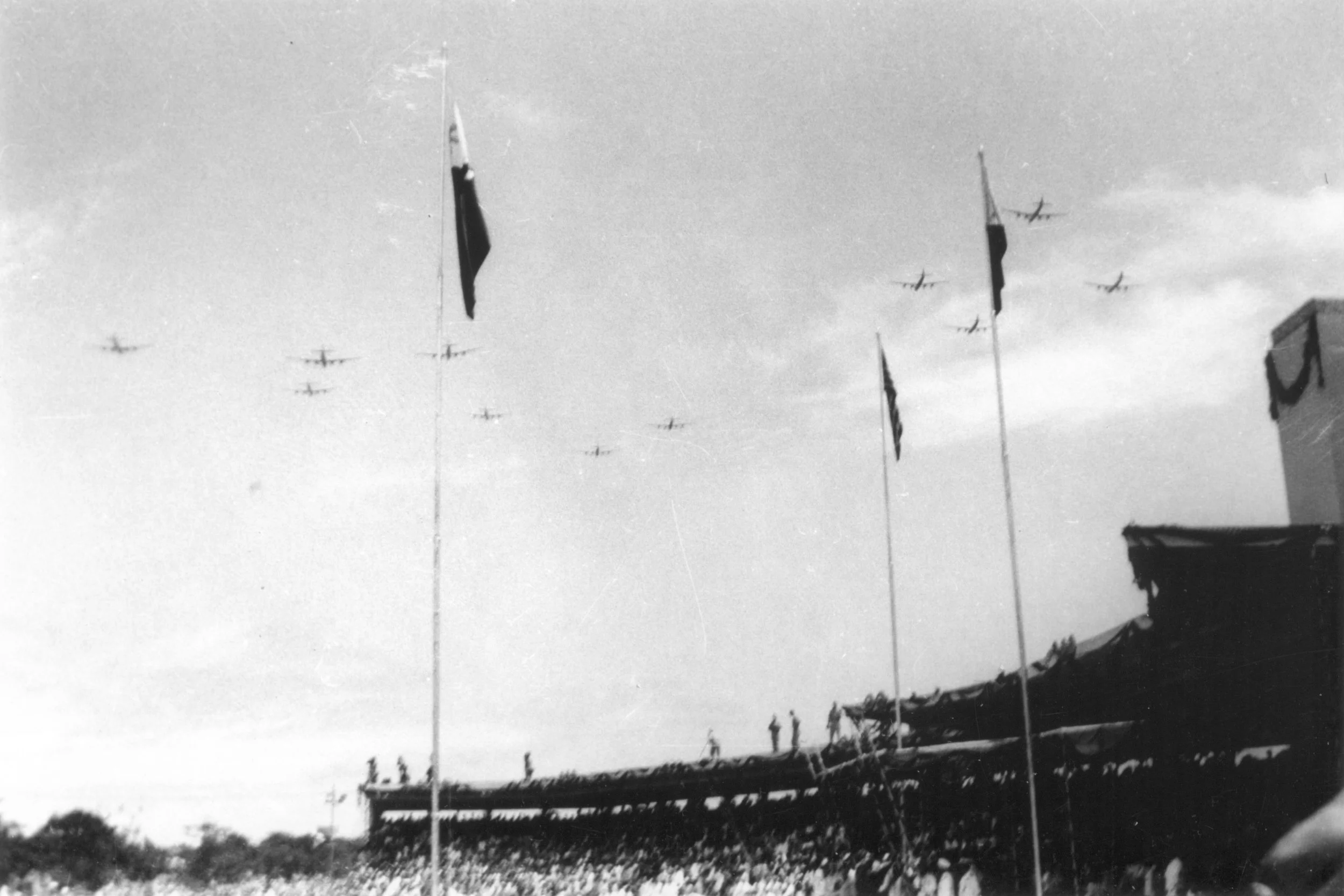
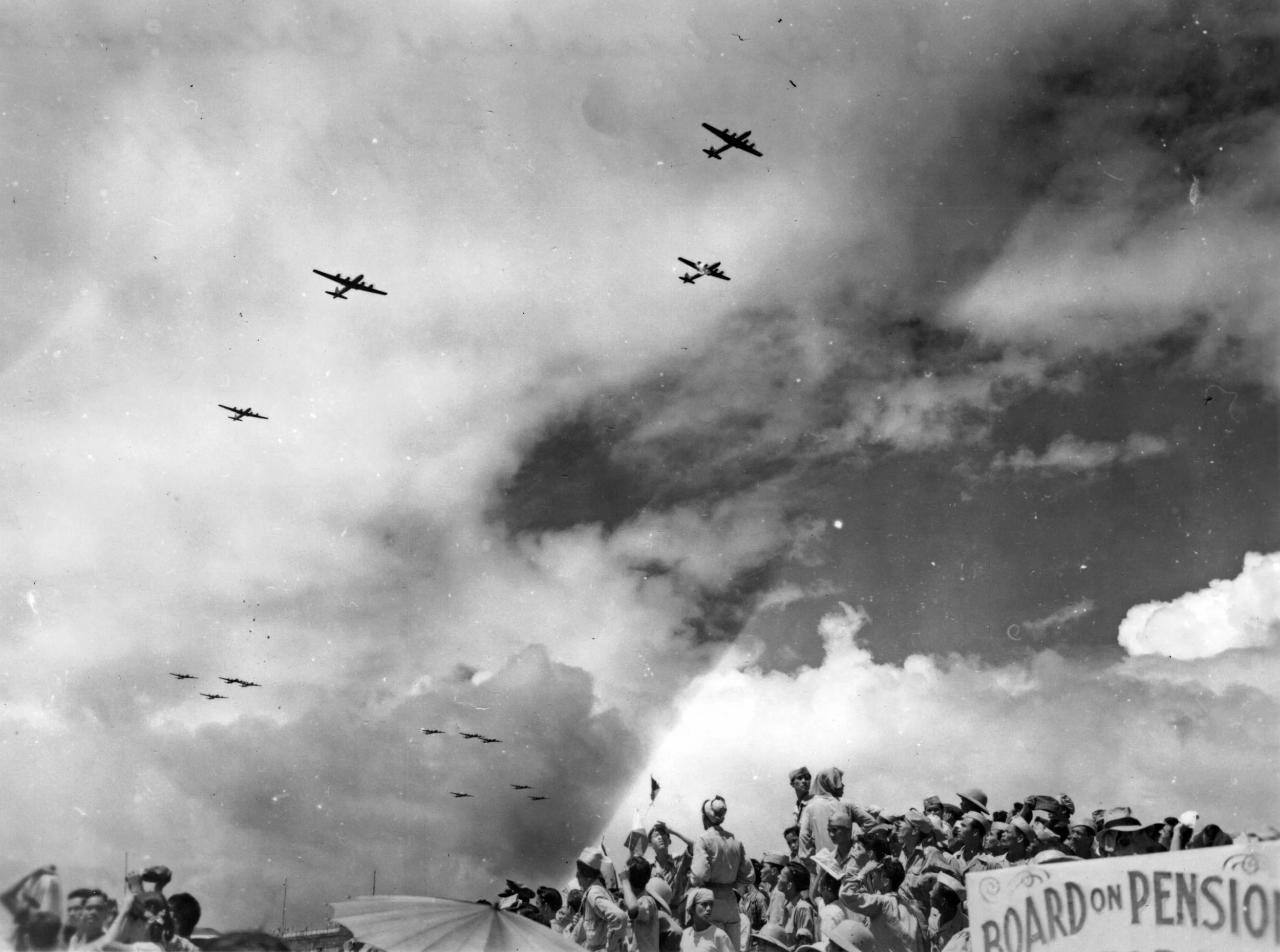
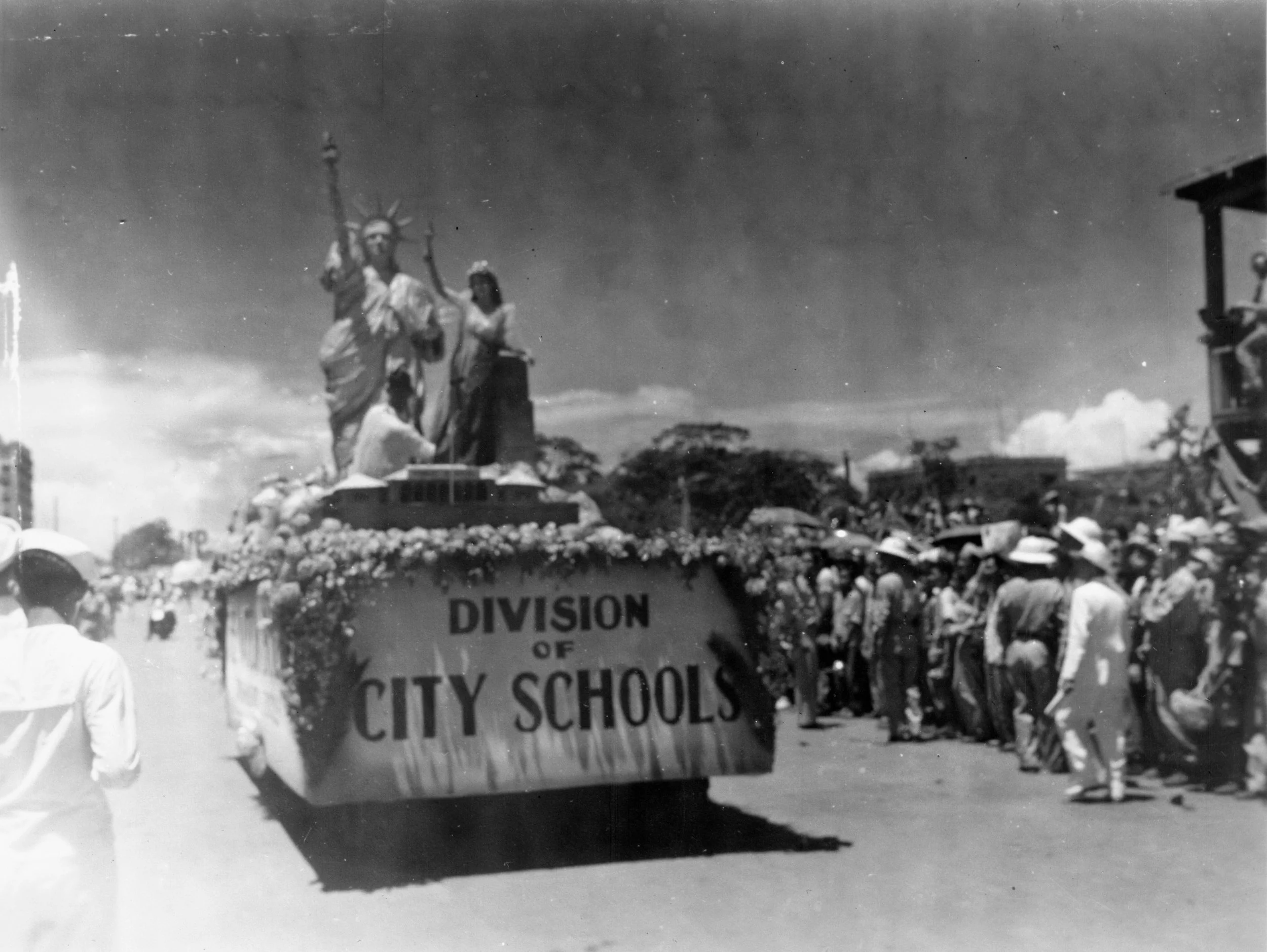
A civic and military parade followed the ceremony. Participants included U.S. and Filipino military, Filipino guerilla units who had fought in World War II, and aged veterans of the Philippine Revolution. U.S. bombers and fighters flew overhead, spelling first a V for victory, then P and R for Philippines Republic. Floats by government and school organizations followed (Jose 2021; "U.S. Flag Lowered" 1946). More than 1,000 Filipinos participated in the parade ("U.S. Grants Philippines" 1946). Many of these parade participants can be seen on newsreel footage.
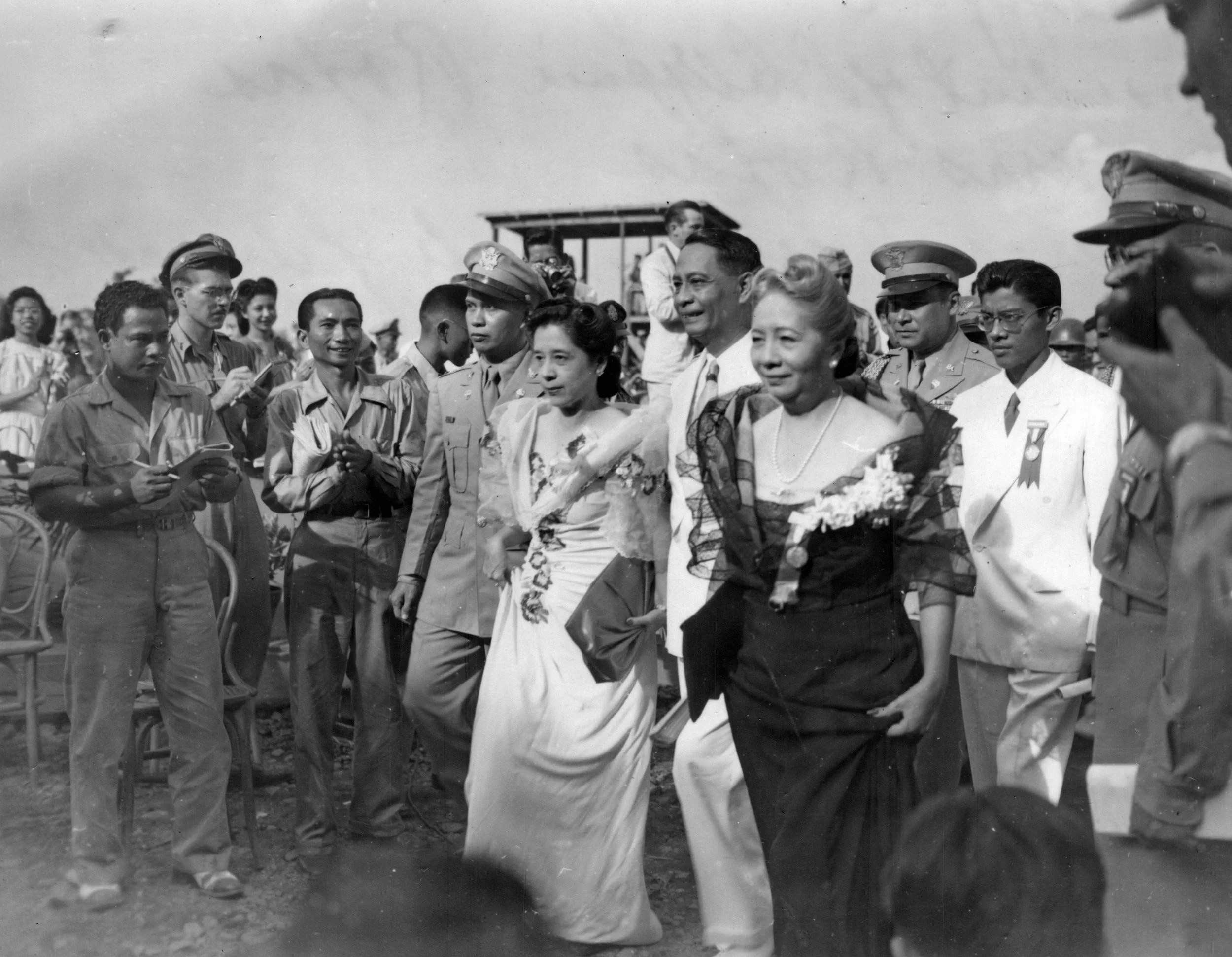
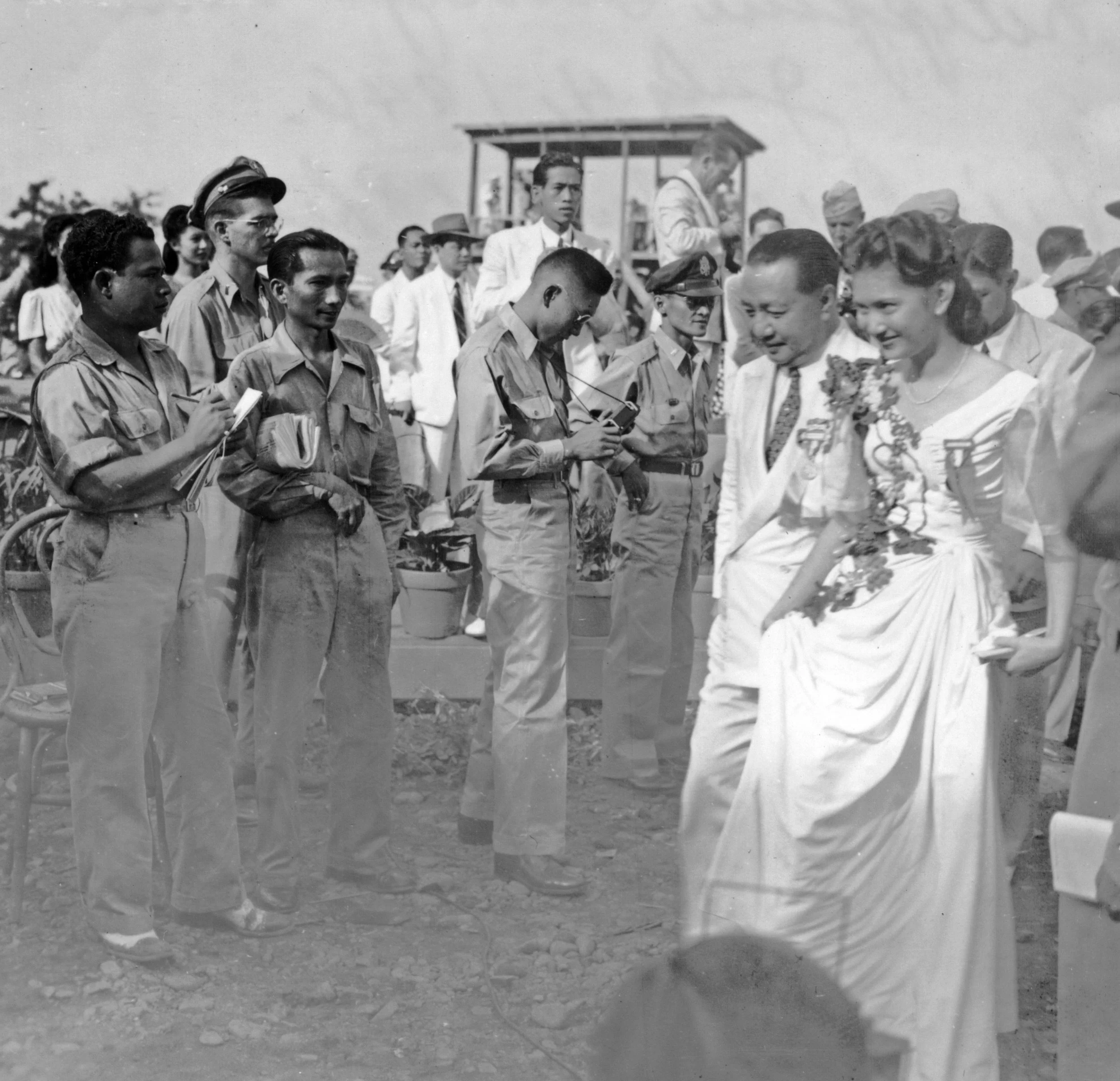
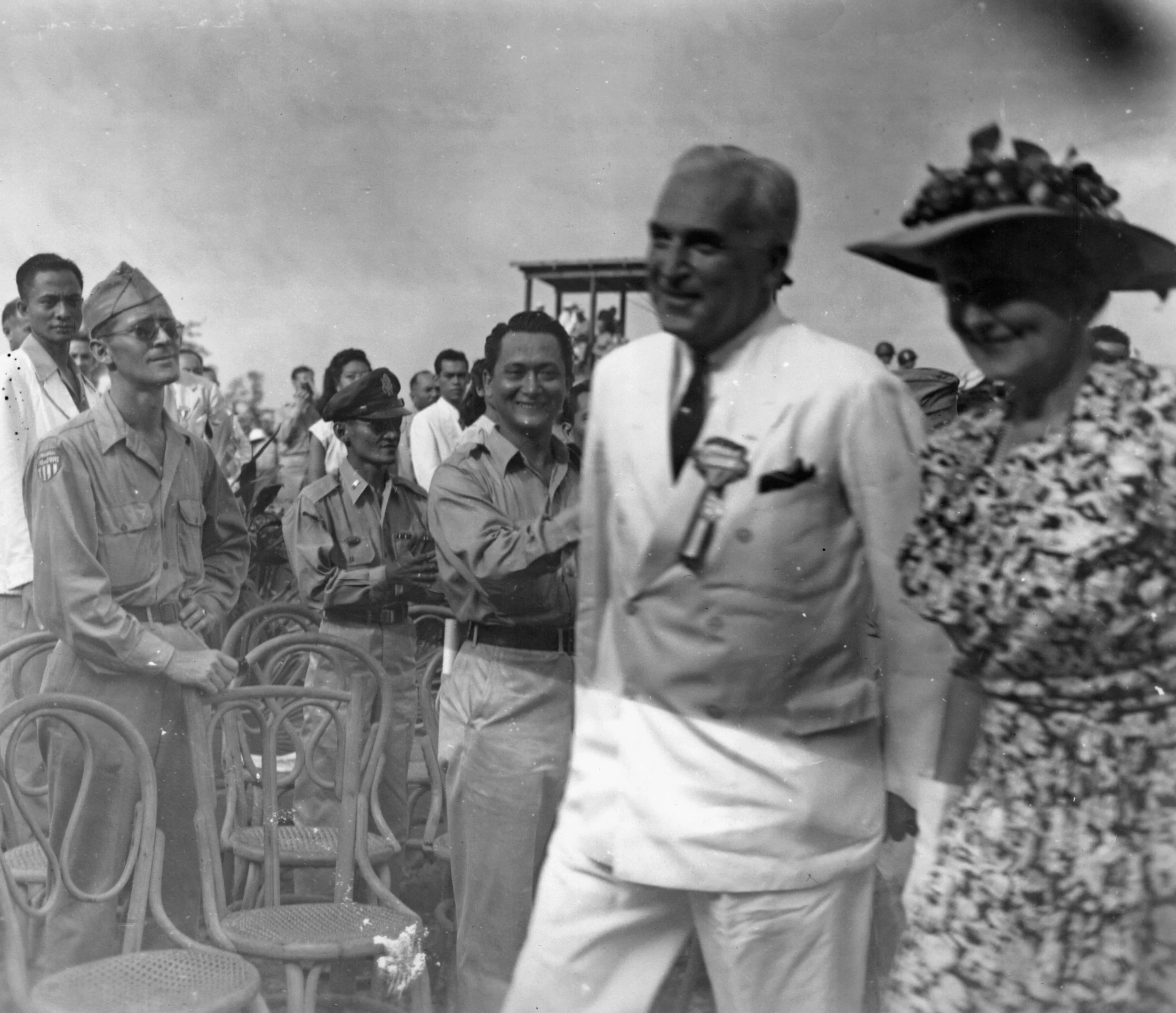
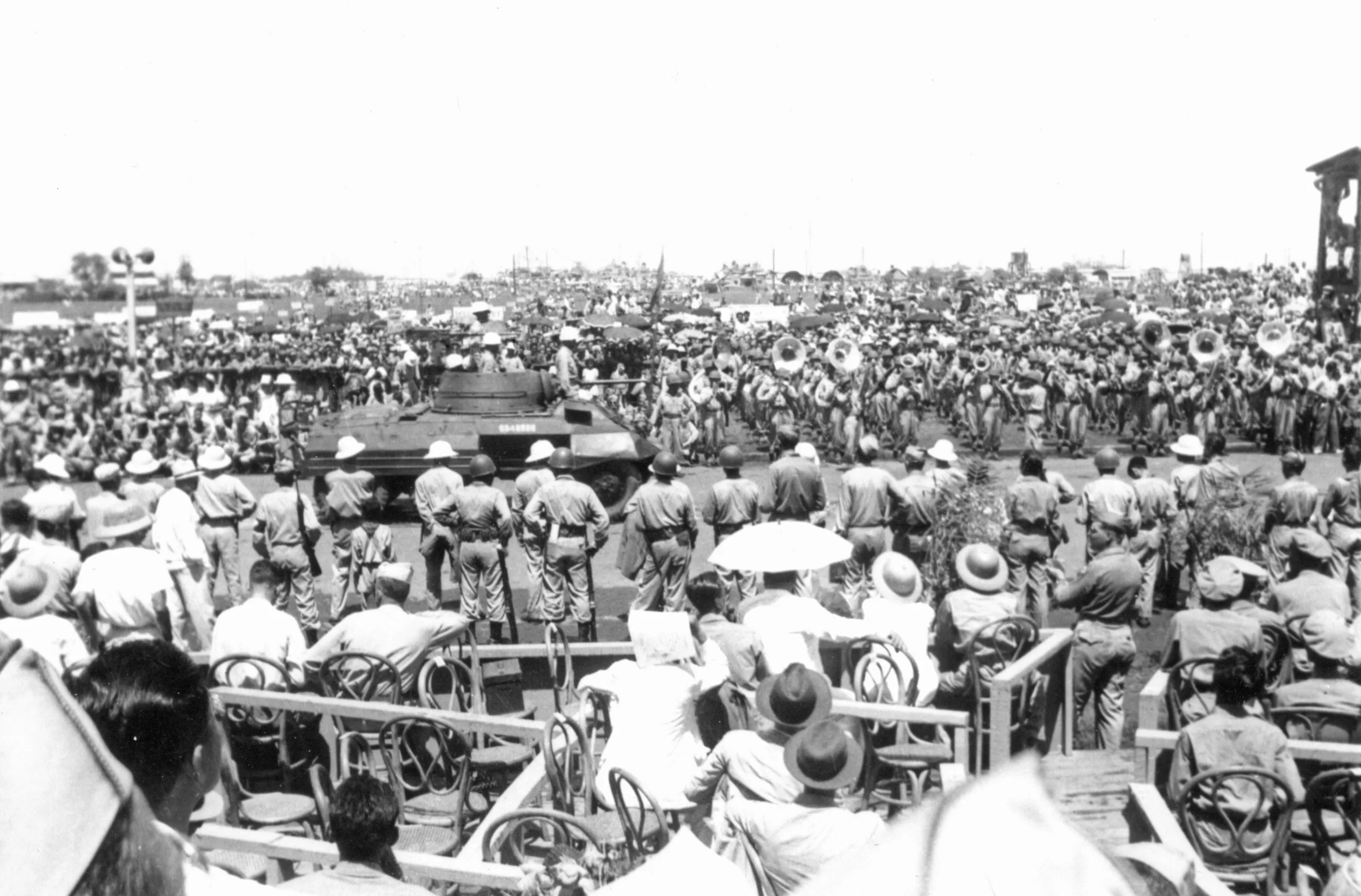
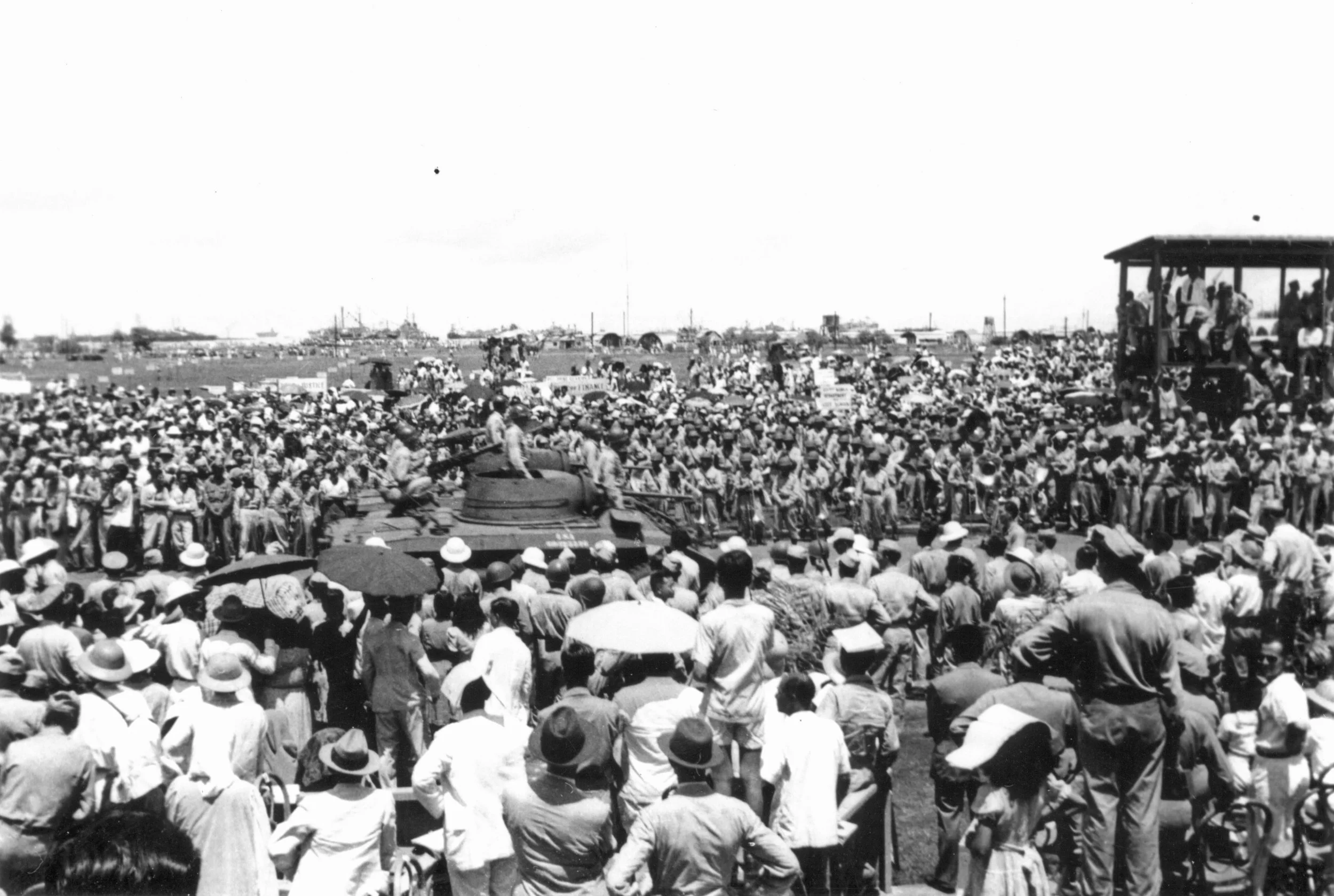
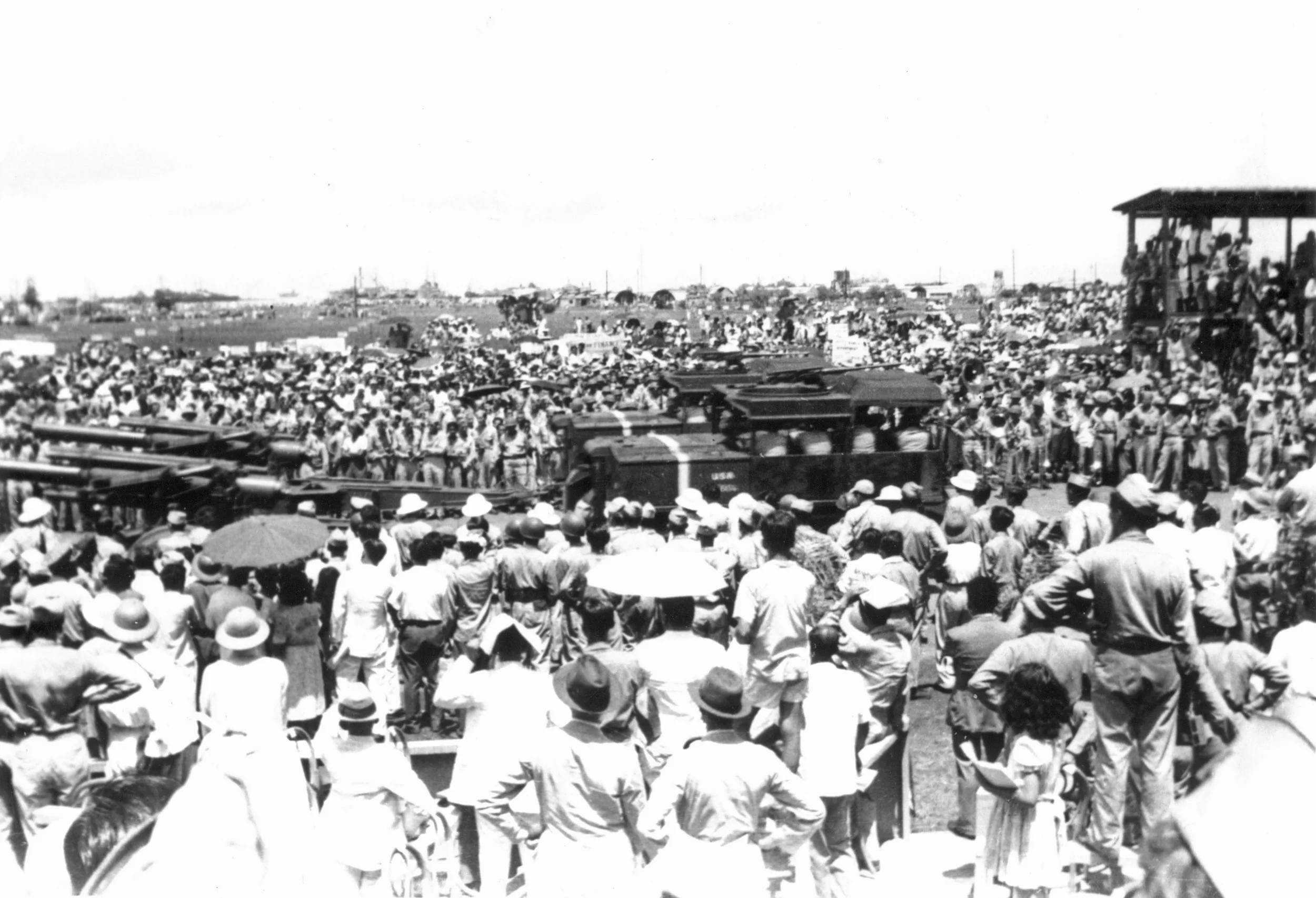
Using detailed descriptions of the ceremonies, I was able to put my grandfather's photos in order and was stunned to discover that they covered most of the events of that morning (see photo gallery at bottom of page). Flipping through the photos was almost like being there. Who knew an old paper lunch bag held such an inspiring (and too often forgotten) piece of history.
[1] For decades, veterans and advocates fought to have these benefits reinstated (Hearing on the Filipino Veterans Equity Act 2007). It was only with the American Recovery and Reinvestment Act of 2009, almost 65 years after the end of the war, that the last surviving 15,000 of these veterans finally received their benefits.
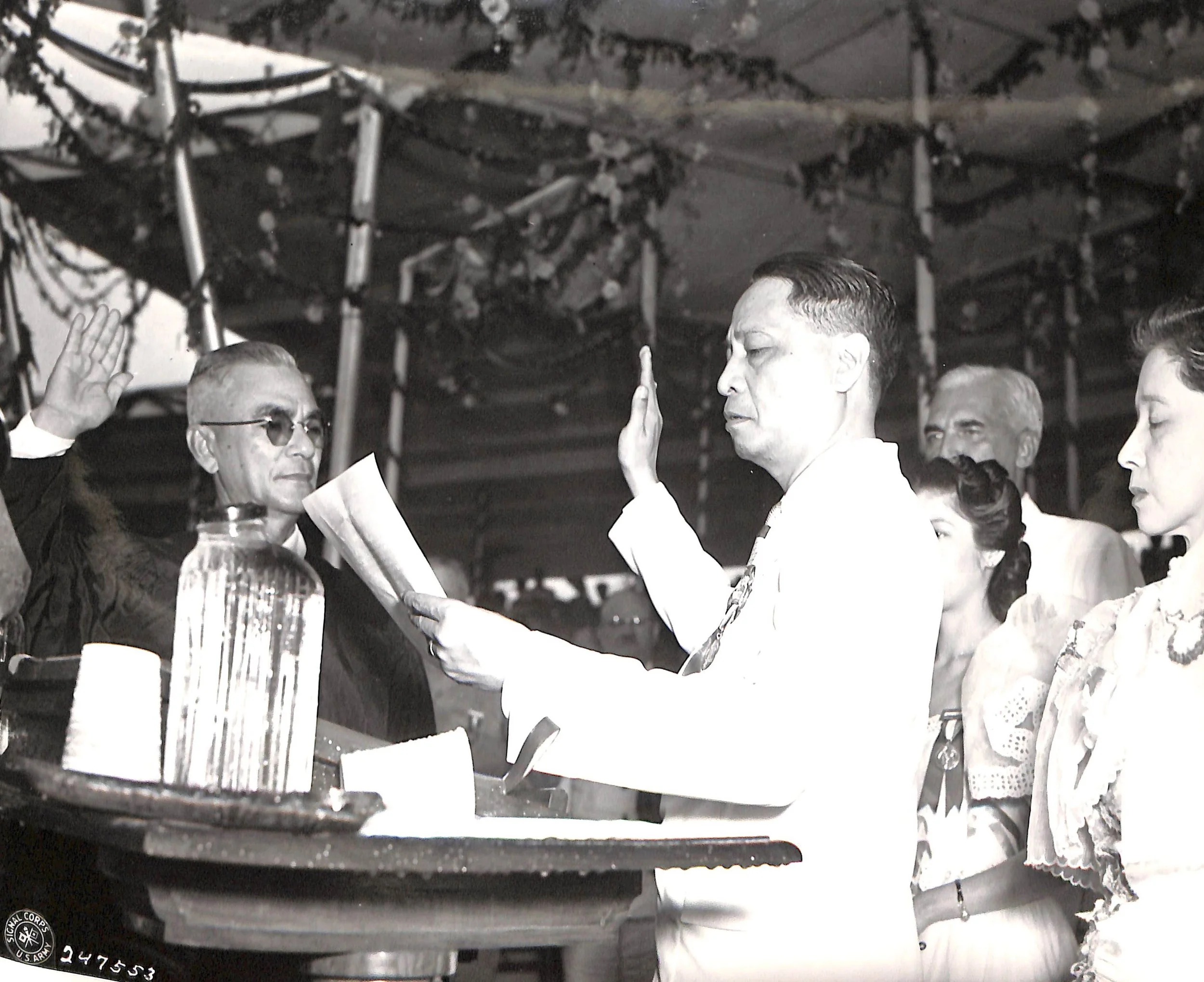
President Roxas being sworn in. From left to right: Chief Justice Manuel Moran, President Manuel Roxas, an unidentified woman (partially visible behind Roxas), High Commissioner Paul V. McNutt, Mrs. Trinidad de Leon-Roxas. July 4, 1946. Manila, Luzon, Philippine Islands. Image from the U.S. National Archives and Records Administration, Record Group 111: Records of the Office of the Chief Signal Officer, Series: Photographs of Military Activity During World War II and the Korean Conflict, 1941-54.
Works Cited
Annual Report of the Chief of the Bureau of Insular Affairs. September 16, 1935. Washington, D.C.: U.S. Government Printing Office.
Barrows, David P. 1905. A History of the Philippines. New York: American Book Company.
Basu, Rumki. 2004. The United Nations: Structure and Functions of an International Organisation. New Delhi, India: Sterling Publishers Pvt Ltd.
Benitez, Conrado. 1926. History of the Philippines: Economic, Social, Political. Boston, MA: Ginn and Company.
Breuer, William B. 1986. Retaking the Philippines: America's Return to Corregidor and Bataan, October 1944-March 1945. New York: St. Martin's Press.
Duldulao, Manuel D. 2007. A Century of Philippine Legislature: 1946-2007. Pasig City, Philippines: Unang Letra Pub.
Hearing on the Filipino Veterans Equity Act of 2007. April 11, 2007. Washington, D.C.: U.S. Government Printing Office.
Hearings before the United States Senate Committee on Appropriations: 79th Congress. 1946. Washington, D.C.: U.S. Government Printing Office.
Herre, Albert W. April 11, 1927. Fishery Resources of the Philippine Islands. Popular Bulletin 3. Manila, Philippines: Government of the Philippine Islands, Department of Agriculture and Natural Resources, Bureau of Science.
Jose, Ricardo Trota. July 2, 2021. "July 4, 1946: The Philippines Gained Independence from the United States." New Orleans, LA: The National WWII Museum.
Mayo, Katherine. 1925. The Isles of Fear: The Truth about the Philippines. New York: Harcourt, Brace and Company.
Middleton, Drew, and Gene Brown. 1980. Southeast Asia. New York: Arno Press.
Morton, Louis. 1953. The War in the Pacific: The Fall of the Philippines. Washington, D.C.: Office of the Chief of Military History, Department of the Army.
Philippine Hostilities After July 4, 1902, and Before January 1, 1914; Also Service on Vessels Under Army During Spanish-American War. 1948. Washington, D.C.: U.S. Government Printing Office.
Schirmer, Daniel B., and Stephen Rosskamm Shalom, ed. 1987. The Philippines Reader: A History of Colonialism, Neocolonialism, Dictatorship, and Resistance. Philippines: South End Press.
Storey, Moorfield, and Marcial P. Lichauco. 1926. The Conquest of the Philippines by the United States: 1898-1925. New York: G. P. Putnam's Sons.
Tarling, Nicholas, ed. 1999. The Cambridge History of Southeast Asia: Volume Four: From World War II to the present. Cambridge: Cambridge University Press.
"U.S. Flag Lowered As Philippines Gain Independence." Thursday, July 4, 1946. The Paducah Sun-Democrat. Paducah, Kentucky. Page 1.
"U.S. Grants Philippines Independence Thursday." Wednesday, July 3, 1946. The Port Huron Times Herald. Port Huron, Michigan. Page 14.
Woods, Damon L. 2005. The Philippines: A Global Studies Handbook. London: Bloomsbury Publishing.
Photos of the Philippines Independence Ceremonies
July 4, 1946
Manila, Luzon, Philippine Islands
Click on a photo to view a larger version. All image are Hoch family photos.