
The Dominion of New England
Growing up, one of my favorite books was The Witch of Blackbird Pond by Elizabeth George Speare. The novel, which won the Newbery Medal in 1959, tells the story of a young woman who, in 1687, comes to live with Puritan relatives in Wethersfield, Connecticut (Speare 1958). The author, who lived at the time in Wethersfield, conducted considerable research as she worked on her book.
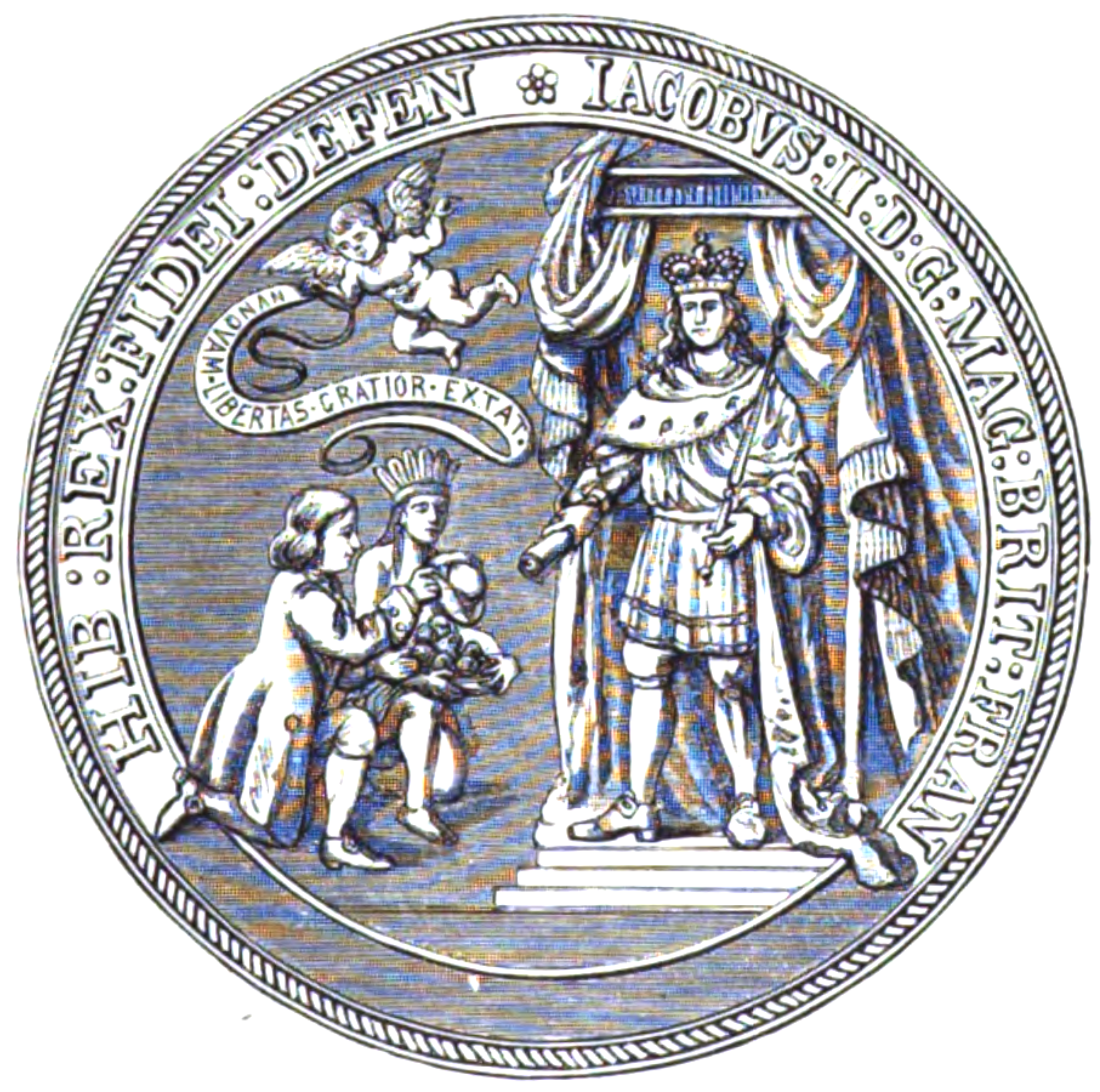
Seal of the Dominion of New England. In Bryant, William Cullen, and Sydney Howard Gay. 1879. A Popular History of the United States. Vol III. New York: Charles Scribner's Sons. Page 9.
As she explains, “History, geography, town records, genealogies, novels set in the same period—I gulped all these down with, at first, little though to anything but my own enjoyment” (Speare 1959, p. 74). In addition to loving the story, I feel a great deal of kinship with this approach to historical research, which is rather like my own approach to this blog, and so was delighted to discover relatives of mine among the founders of the earliest English settlements in Connecticut, including Wethersfield.
The history of Connecticut has its roots in the Massachusetts Bay Colony. Founded in 1628, the colony grew rapidly during the 1630s, fueled by English Puritans who wished to escape the oppression they experienced in England, where the Anglican church was the only acceptable religion. While they were united in their opposition to Anglicanism, the settlers in New England agreed on little else, and political and theological disagreements, along with the pressure of a rapidly increasing population, led small groups of settlers to strike out on their own, often ignoring the efforts of the colony’s leaders to maintain control over them (Adams 1921).
One such contrarian was my 10th great-granduncle John Oldham. John Oldham and his sister Lucretia came to Massachusetts in 1623 and settled in Plymouth, where Lucretia married Jonathan Brewster, the son of Elder William Bewster of the Mayflower. She seems to have settled into life in New England with little difficulty, but her brother was another matter. In 1624, he took up with a new arrival, the Rev. John Lyford, an unsavory character who had come to New England to escape allegations of rape and who was a supporter of the Church of England. Oldham and Lyford began a whisper campaign against the leadership of Plymouth Colony and wrote letters back to England attempting to undermine the leaders with their financial backers. When Plymouth Governor William Bradford learned of these letters, he had them intercepted and banished Oldham and Lyford from the colony (Anderson 1995).
After traveling and trading throughout New England for several years, John Oldham in 1631 received grant of 500 acres in Watertown, a settlement of the Massachusetts Bay Colony where, as one author puts it, “a more truly catholic spirit, and more just ideas of civil and religious liberty prevailed” (Bond 1860, p. 863). Oldham certainly seems to have gotten along better in Watertown than he did in Plymouth. He became overseer of ammunition and, in 1632, was selected as one of the first representatives to the house of deputies, which advised the colony’s government on matters of taxation (Bond 1860).
While living in Watertown, Oldham also continued to trade with Native Americans in the region and in 1633, undertook an expedition into what is now Connecticut, bringing back glowing reports of fertile land and plentiful wildlife along the Connecticut River. Residents of several Massachusetts Bay settlements appealed to the government to allow them to move to this new area. While the general court debated the matter, Oldham and several others from Watertown took matters into their own hands and simply moved to what is now Wethersfield in 1634, establishing the first English settlement there. They were joined soon after by other settlers from Watertown while a group from Newtown (later Cambridge) settled nearby at Hartford (Bond 1860). These two settlements, together with a trading post at Windsor, were the start of the Connecticut Colony.
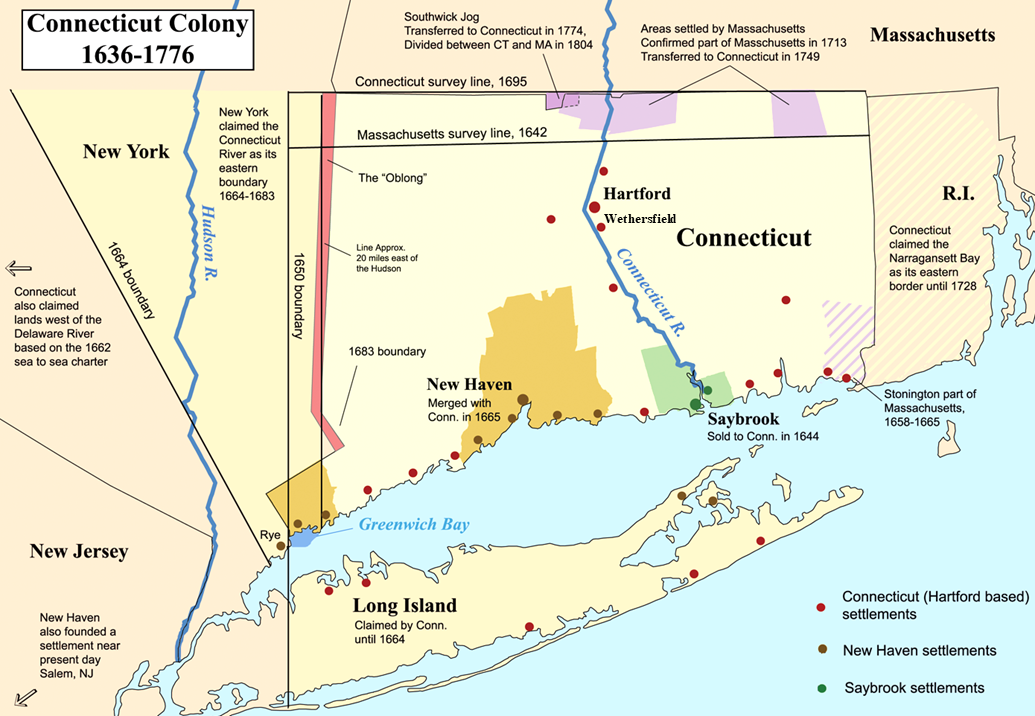
K. Musser. 2008. Map showing the Connecticut, New Haven, and Saybrook colonies from 1636 to 1776. Image from Wikimedia Commons.
Even as a solid citizen and one of the planters of Wethersfield, John Oldham could not stay out of trouble. In 1636, while on a trading expedition to Block Island off the coast of Massachusetts, he was attacked and killed by Native Americans. [1] The government of Massachusetts Bay responded to this attack by launching an assault, first on the Native inhabitants of Block Island and then, after a series of incidents resulting in the deaths of both Native Americans and colonists, more broadly against the Pequot nation, one of the most powerful Native groups on the New England coast (Vaughan 1964). The Pequot War was one of the earliest in a long line of wars over the next 300 plus years between Native Americans and the European settlers whose desire for land and belief in their own superiority led them to lay claim to the North American continent.
Despite the unorthodox founding of the colony and the violent conflict of the Pequot War, Connecticut Colony thrived, growing rapidly as some English settlers chose to bypass Massachusetts Bay and come directly to Connecticut. Connecticut was a bit of an anomaly among the English colonies in North America. It initially had no royal charter like Massachusetts Bay and Virginia, nor was it owned by a single proprietor like Maryland and later Pennsylvania. Instead, the Connecticut colonists were largely left to govern themselves. In 1639, they established the Fundamental Orders, which created a system of rule by leaders elected by the freemen of the colony. Even when Charles II of England finally granted a royal charter to Connecticut in 1662, it was a very liberal one, continuing the liberties established by the Fundamental Orders (Adams 1921; Andrews 1944).
All might have been well in Connecticut after receiving the royal charter had not Charles and his advisors come to believe that the New England colonies had far too much freedom in terms of self-government, trade, and religion. They objected to the theocracy practiced in colonies like Massachusetts Bay, where voting rights were limited to members of the Congregational Church. They had even greater problems with colonial refusal to obey the Navigation Acts, which prohibited the export of certain products from America to any country other than England and required goods imported in America come only from or through England (Adams 1921; Barnes 1923).
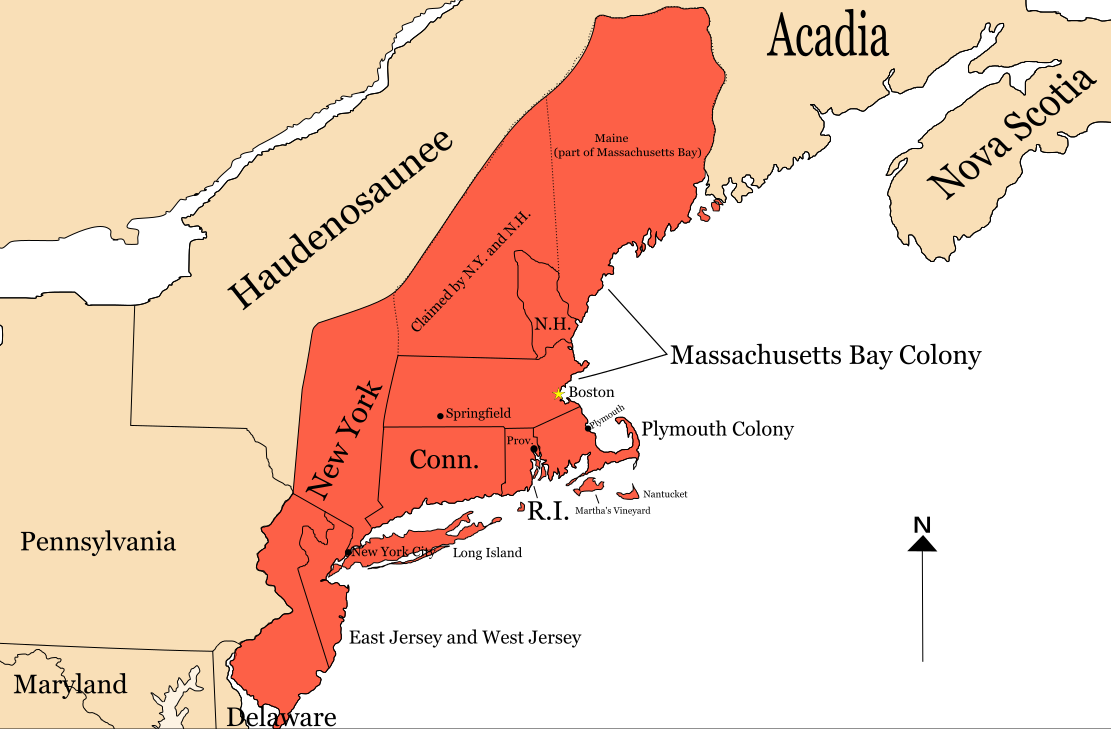
In an effort to regain control over the New England colonies, the English government created the Dominion of New England, which included Maine, New Hampshire, Massachusetts Bay, Plymouth, Rhode Island, and Connecticut. Following the death of Charles II in 1685, his successor, James II, added New York and East and West Jersey to the Dominion.
Tpwissaa. 2020. Map of the Dominion of New England, as of 1688. Image from Wikimedia Commons.
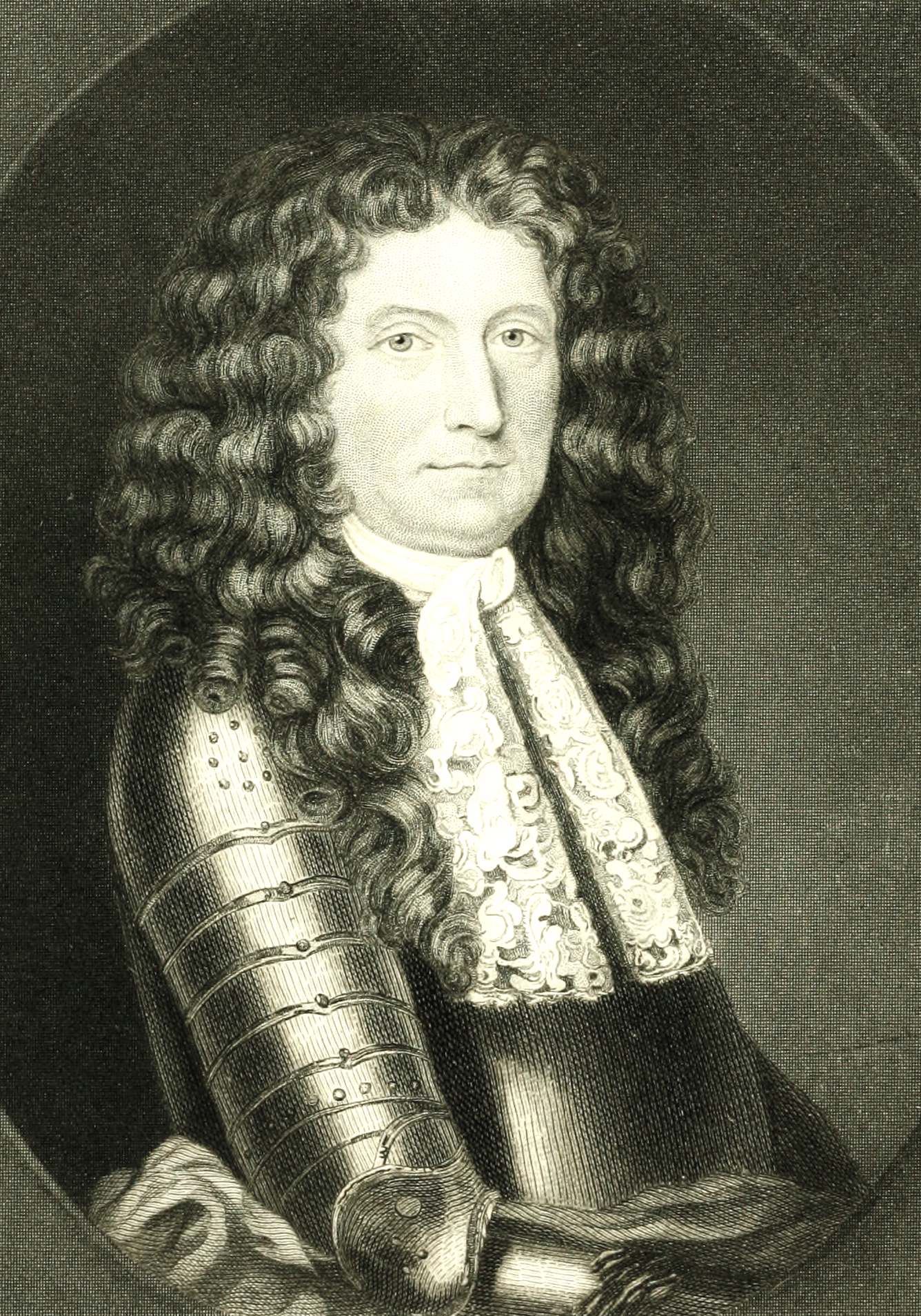
James II also appointed Sir Edmund Andros, governor of New York, as the governor of the Dominion, specifying that he would govern with only a council of advisors appointed by the crown rather than an assembly elected by the colonists. Andros had little use for the colonists’ insistence on self-government. He demanded that Anglican churches be permitted in all New England colonies, invalidated many colonists’ land titles, created new taxes, and restricted the use of town meetings, a central element of New England life. When the colonists protested that his actions constituted taxation without representation, he had them arrested and fined (Adams 1921; Barnes 1923).
Portrait of Sir Edmund Andros. In Whitmore, William Henry. 1868. A Memoir of Sir Edmund Andros, Knt. Boston, MA: T.R. Marvin and Son. Frontispiece.
Andros and his new laws were highly unpopular in New England and nowhere more so than in Connecticut. Creation of the Dominion had resulted in the invalidation of the New England colonies’ royal charters. Colonial leaders were ordered to return the charters to the government, but Connecticut refused. On October 31, 1687, Andros met with colonial leaders in Hartford in an effort to obtain the charter. Legend has it that the candles in the room were suddenly blown out and the charter disappeared, later to be stashed in an enormous oak tree for protection (Corrigan 2020). This episode figures in The Witch of Blackbird Pond, but Andros is identified only as the governor of Connecticut. I learned quite recently about the Dominion of New England, and that knowledge has added a whole layer of understanding when I remember the debates about self-governance versus loyalty to the Crown that underlie part of the novel’s plot.
The Dominion of New England was very short-lived, perhaps explaining its absence from any American history class I’ve ever taken. In November 1688, English noblemen, frustrated by their Catholic king’s demand for tolerance of his coreligionists, overthrew James II and gave the throne to his Protestant daughter Mary and her husband William of Orange. News of this Glorious Revolution undermined royal authority in the colonies, and on April 18, 1869, there was an armed revolt against the colonial government in Boston. Andros was captured and held for 10 months before finally being sent back to England. The colonists then petitioned the new king for, and ultimately received, the return of their royal charters (Adams 1921; Barnes 1923). More than a century before the Declaration of Independence, the American colonists had succeeded in regaining the right to representation and some measure of self-governance.
[1] The reasons for Oldham’s death are unclear. The attackers seem to have been Narragansett-allied Native Americans who objected to Oldham trading with the Pequots. However, because of an earlier attack on English traders by the Pequot and because Oldham’s attackers fled to the Pequot for protection, the English colonists blamed the Pequot for the incident. Certainly, the colonists perceived the Pequot as a significant threat to their existence, making them an obvious target for attack (Vaughan 1964).
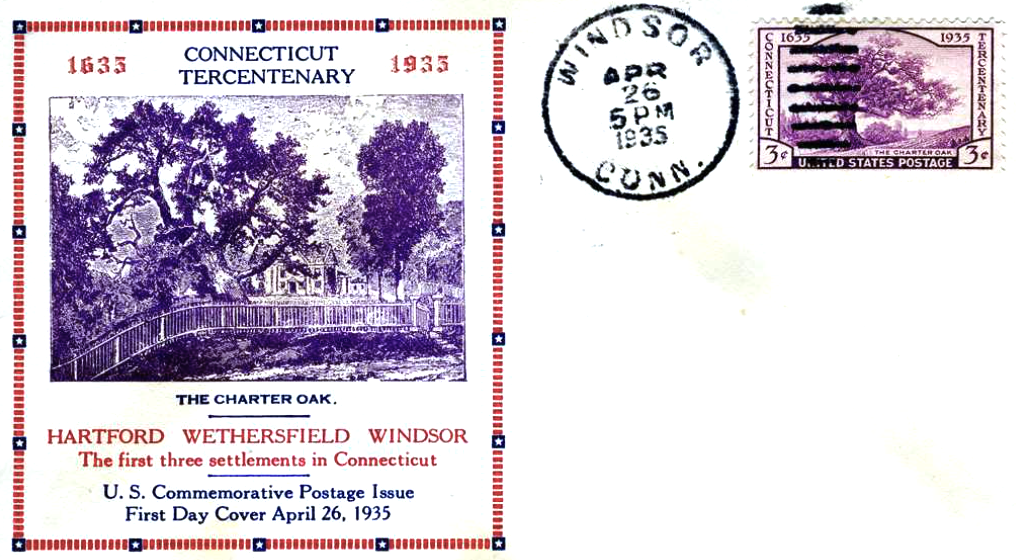
First Day Cover and Charter Oak U.S. commemorative postage stamp for Connecticut Tercentenary in 1935. Photo from Windsor Historical Society.
Works Cited
Adams, James Truslew. 1921. The Founding of New England. Boston, MA: The Atlantic Monthly Press.
Anderson, Robert Charles. 1995. The Great Migration Begins: Immigrants to New England 1620-1633. Volume II. Boston, MA: New England Historic Genealogical Society.
Andrews, Charles M. 1944. “On Some Early Aspects of Connecticut History.” The New England Quarterly 17 (1): 3-24.
Barnes, Viola Florence. 1923. The Dominion of New England: A Study in British Colonial Policy. New Haven, CT: Yale University Press.
Bond, Henry. 1860. Genealogies of the Families and Descendants of the Early Settlers of Watertown, Massachusetts. Second Edition. Boston, MA: New England Historic Genealogical Society.
Corrigan, Dave. 2020. “Hiding the Charter: Images of Joseph Wadsworth’s Legendary Action.” ConnecticutHistory.org. Middleford, CT: CT Humanities.
Speare, Elizabeth George. 1958. The Witch of Blackbird Pond. Boston, MA: Houghton Mifflin.
Speare, Elizabeth George. 1959. “Newbery Award Acceptance.” In Newbery and Caldecott Medal Books: 1956-1965. Boston, MA: The Horn Book, Inc.
Vaughan, Alden T. 1964. “Pequots and Puritans: The Causes of the War of 1637.” The William and Mary Quarterly 21 (2): 256-269.