
Declaring Independence
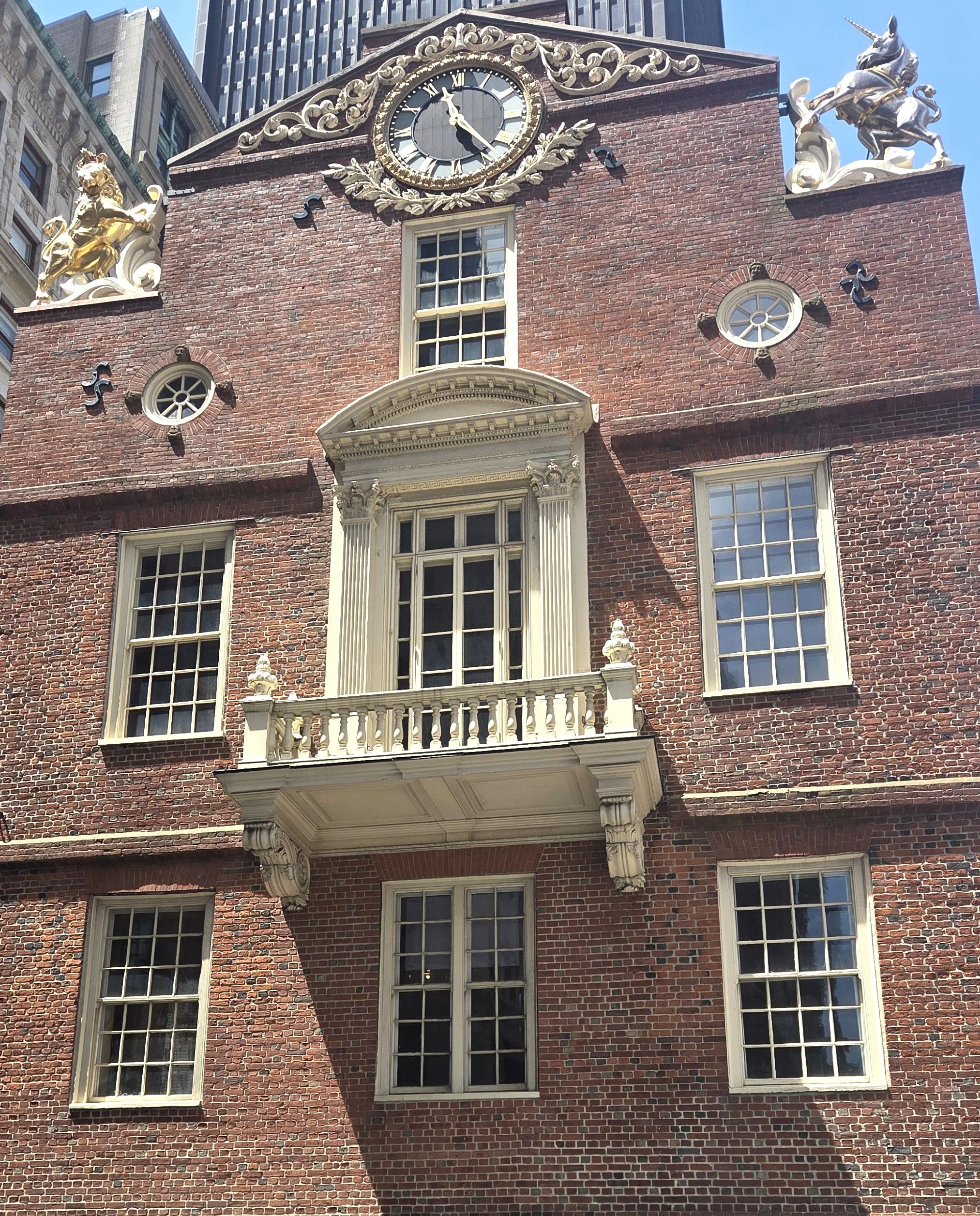
I was recently in Boston, Massachusetts, where I visited the Old State House, built in 1711 to hold the offices of the colonial governor and council. There I learned that the Declaration of Independence was read from the building’s balcony on July 18, 1776. The task of reading the Declaration fell to William Greenleaf, the sheriff of Suffolk County and my third cousin eight times removed. Unfortunately, William’s voice was quite weak so he was obliged to recruit the help of Thomas Crofts, who repeated each line after William read it.
The Dominion of New England
Growing up, one of my favorite books was The Witch of Blackbird Pond by Elizabeth George Speare. The novel, which won the Newbery Medal in 1959, tells the story of a young woman who, in 1687, comes to live with Puritan relatives in Wethersfield, Connecticut (Speare 1958). So I was delighted to discover relatives of mine among the founders of the earliest English settlements in Connecticut, including Wethersfield.

A Manifest Incongruity
Because my family has lived in America for a very long time, I am eligible to join many of the lineage societies that limit their membership to the descendants of early settlers or men who served in various wars. I can’t say I’ve ever had the desire to actually join any of these societies, however, with one exception.

The First English Settlers in New England
Until recently, if you had asked me what colony was established by the English in North America in 1607, I would have said Jamestown, and I would have been right, but only partially. In fact, there were two colonies established by the English in North America in 1607. Jamestown, established in May 1607 on the James River in Virginia, was one; the other was the Popham Colony, established in August 1607 at the mouth of the Kennebec River, north of what is now Portland, Maine.