
This Inglorious Indian War
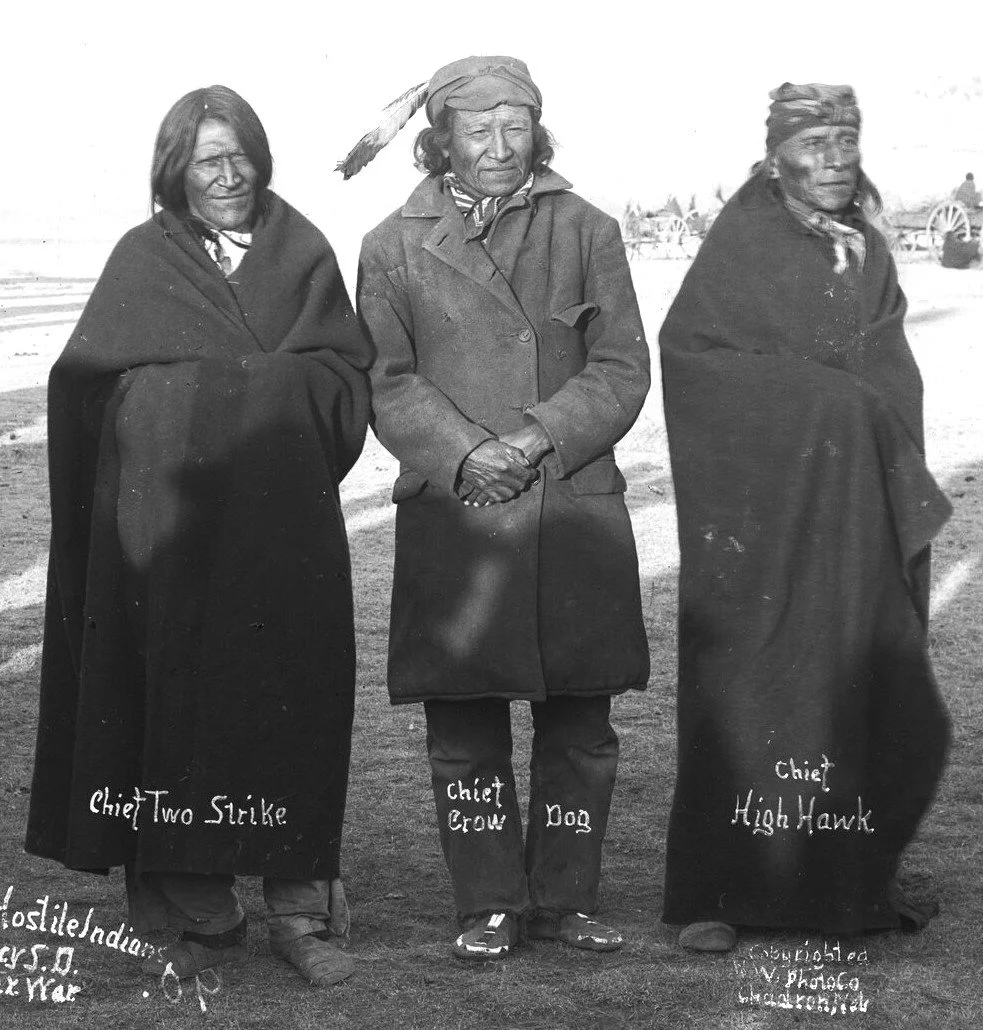
On November 17, 1890, Major Guy V. Henry of the 9th Cavalry, commander of Ft. McKinney, Wyoming, received a telegram ordering him to the Pine Ridge Reservation in South Dakota. Two days later, Henry and D Troop of the 9th Cavalry, commanded by my great-great-grandfather Cpt. John S. Loud, set off on the roughly 300-mile journey to the lands of the Lakota people. The 9th Cavalry’s D Troop were not the only soldiers ordered to proceed to South Dakota at that time.

The Last of the Post Traders
Several of the photographs in the Loud family scrapbook that covers their years at Ft. Washakie, Wyoming, depict James K. Moore, the long-time post trader. Moore had come to the West as a young man and worked in various mercantile operations. He became the post trader for Ft. Washakie (then called Camp Auger) in 1871, before the actual fort was built, and he remained there until 1907, only two years before the fort was decommissioned.

Starvation and Bad Treatment
When the Civil War began in April 1861, the United States had only a small standing army. Over the next year, volunteer regiments were recruited from all the Northern states. One such regiment was the 103rd Pennsylvania Volunteer Infantry, which was established in Kittanning, Pennsylvania, northeast of Pittsburgh, and enlisted men from the midwestern section of the state (Dickey 1910). Five of my relatives were among the men who volunteered for this regiment. These included my four-times great-grandfather Reese Thompson, who was nearly 50 years old but told the army he was 43, his 14-year-old son Milton, and his nephew and namesake Reese Shay.

The Life of an Officer’s Wife
I’ve written before about my great-great grandmother Kate Mifflin Loud and her adventures as an army officer’s wife on the 19th century western frontier. We know quite a bit about what life was like for the wives of army officers in the west because there are many journals, compiled letters, and memoirs written by such women, some published in their lifetimes and others collected by modern scholars. Officers’ wives who wrote memoirs include Elizabeth Bacon Custer, wife of General George Armstrong Custer, and Ellen McGowan Biddle, wife of Colonel James A. Biddle, who was the commander of the 9th Cavalry at the time my great-great-grandparents were living at Fort Washakie, Wyoming.