

The Long Road to Independence
A small, brown paper bag filled with mostly unlabeled, curling photos revealed history that I had never learned about in school. My grandfather, Louis A. Hoch, was a career U.S. Army officer. I knew that he had been stationed in the Philippines for a short time, but I knew nothing else about that period in his life.
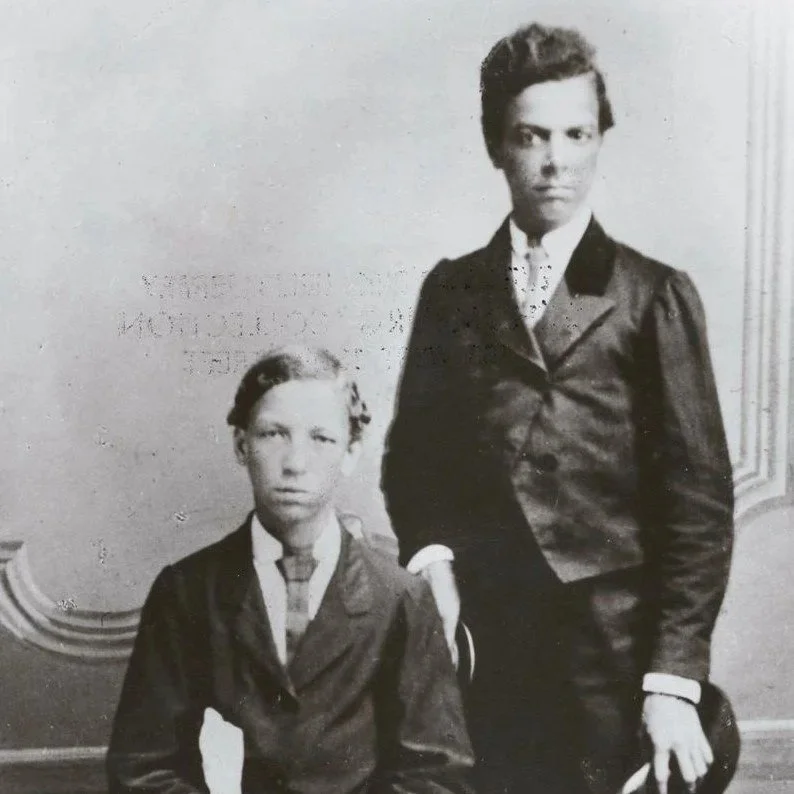
The Grimké Brothers
It’s impossible to spend much time reading about the abolition and women’s suffrage movements in early 19th century America without running across the Grimké sisters. Sarah and Angelina Grimké were among the leading lights of both those civil rights movements prior to the Civil War, and I have long admired their courage and dedication to promoting social equality. It was only recently, however, that I learned that Sarah’s and Angelina’s nephews—the Grimké brothers—were among the leading lights of late 19th century and early 20th century intellectual and civil rights movements.

Wide Awake in 1860
In 1860, my four-times great-uncle, Servetus Longley, invented and patented a street-sweeping machine. It’s an ingenious device, with brushes attached at an angle to a set of wheels so that the machine can be pushed along a street. This invention might have made a fortune for Servetus. In fact, in the fall of 1860, the city of Cincinnati, Ohio, granted him a three-year contract to use his machine to clean the streets in the city’s western district. They withdrew the contract a few weeks later and therein lies a tale.

Sir Knight
I stumbled into exploring the world of Freemasonry somewhat by accident. My aunt mentioned that her grandfather had been a Knight Templer. I found this baffling because the only Knights Templar I knew of were the militant medieval order disbanded by the pope in 1312. Soon after, while researching one of my great-great-grandfathers, I learned that he was also a Knight Templar, which cemented my interest in learning about the organization.