
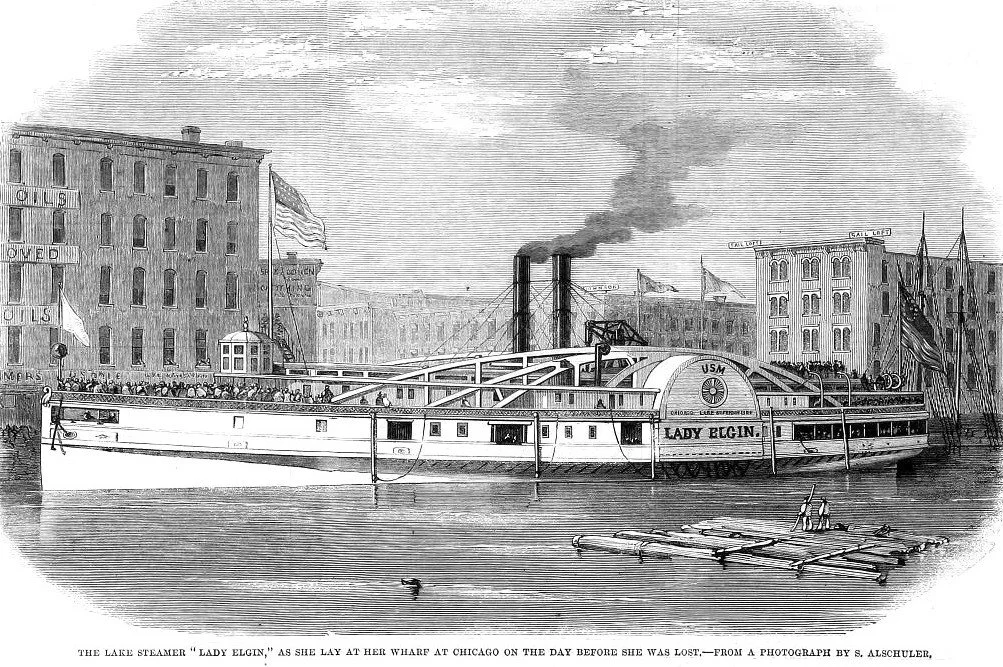
Lost on the Lady Elgin
On September 8, 1860, the steamship Lady Elgin, overloaded with passengers on a fundraising excursion, sank on Lake Michigan, an incident which remains the deadliest wreck on the open waters of the Great Lakes
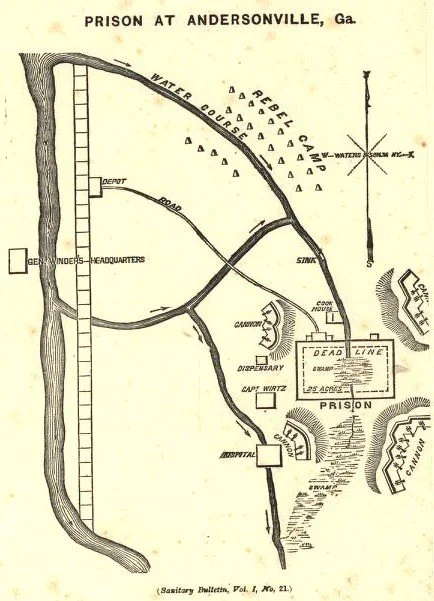
Starvation and Bad Treatment
When the Civil War began in April 1861, the United States had only a small standing army. Over the next year, volunteer regiments were recruited from all the Northern states. One such regiment was the 103rd Pennsylvania Volunteer Infantry, which was established in Kittanning, Pennsylvania, northeast of Pittsburgh, and enlisted men from the midwestern section of the state (Dickey 1910). Five of my relatives were among the men who volunteered for this regiment. These included my four-times great-grandfather Reese Thompson, who was nearly 50 years old but told the army he was 43, his 14-year-old son Milton, and his nephew and namesake Reese Shay.

Wide Awake in 1860
In 1860, my four-times great-uncle, Servetus Longley, invented and patented a street-sweeping machine. It’s an ingenious device, with brushes attached at an angle to a set of wheels so that the machine can be pushed along a street. This invention might have made a fortune for Servetus. In fact, in the fall of 1860, the city of Cincinnati, Ohio, granted him a three-year contract to use his machine to clean the streets in the city’s western district. They withdrew the contract a few weeks later and therein lies a tale.
The Real McCoy
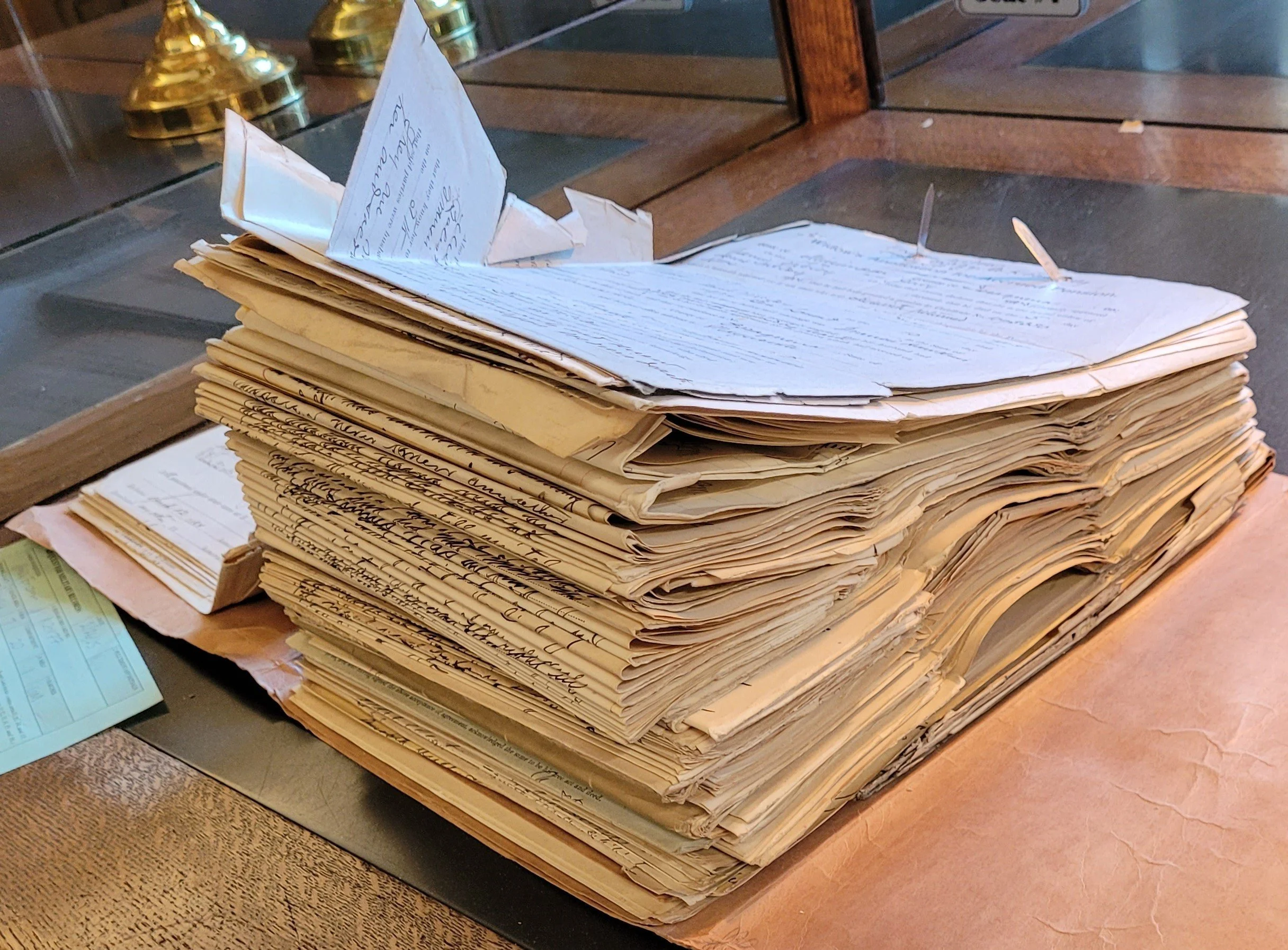
When you’re working with Civil War pension files at the National Archives, you never really know what you’re going to get. A soldier’s file could be a few pages or a few hundred. It could include a simple rejection or repeated special investigations. If you’re lucky, it might include something like a photograph or an original marriage certificate. I’ve looked at a lot of pension files over the years and know to expect the unexpected, but nothing could have prepared me for Lewis McCoy. As this photo shows, it was a monster.